


How Parking in Hallstatt Really Works
A clear overview of parking areas, fees, traffic rules, alternatives, and practical tips for visitors.
Parking in Hallstatt is one of the biggest challenges for many travelers. The UNESCO World Heritage village sits tightly between lake and mountain — which means limited parking spaces, a controlled traffic system, and strict access rules for cars and buses.
Many visitors arrive without preparation and lose valuable time because parking lots are full or certain access roads are temporarily closed.
This guide summarizes all essential information in a clear, structured way: the official parking areas P1–P4, fee systems, access regulations, common issues, alternatives such as Obertraun, and practical tips for day visitors and independent travelers.
This way, you can plan your visit more calmly — and know exactly which parking options are realistic on the day of your trip.
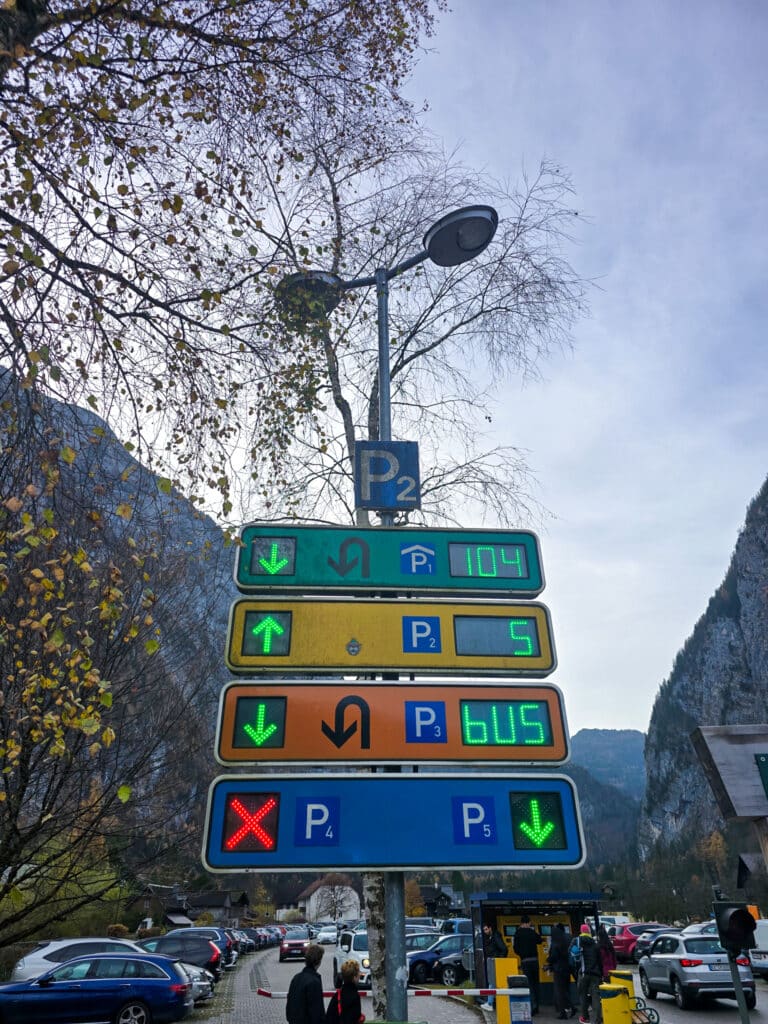
Why Parking in Hallstatt Is So Strictly Regulated
Hallstatt is one of Austria’s smallest yet most heavily visited villages. The entire town consists of a single narrow lakeside road with no real side streets and almost no room for passing. At the same time, thousands of visitors arrive every day — especially from spring to autumn.
To prevent traffic congestion and gridlock in the village center, Hallstatt introduced a dedicated parking and traffic management system that directs visitors to parking areas outside the historic core.
The result:
No public parking spaces inside the village
Regulated access and occasional full road closures
A clear system of four official parking areas (P1–P4)
Strict regulations for buses, timed entry slots, and on-site traffic control
What this means for visitors: Arriving prepared saves time, stress, and unnecessary walking — and ensures a far more relaxed experience in Hallstatt.
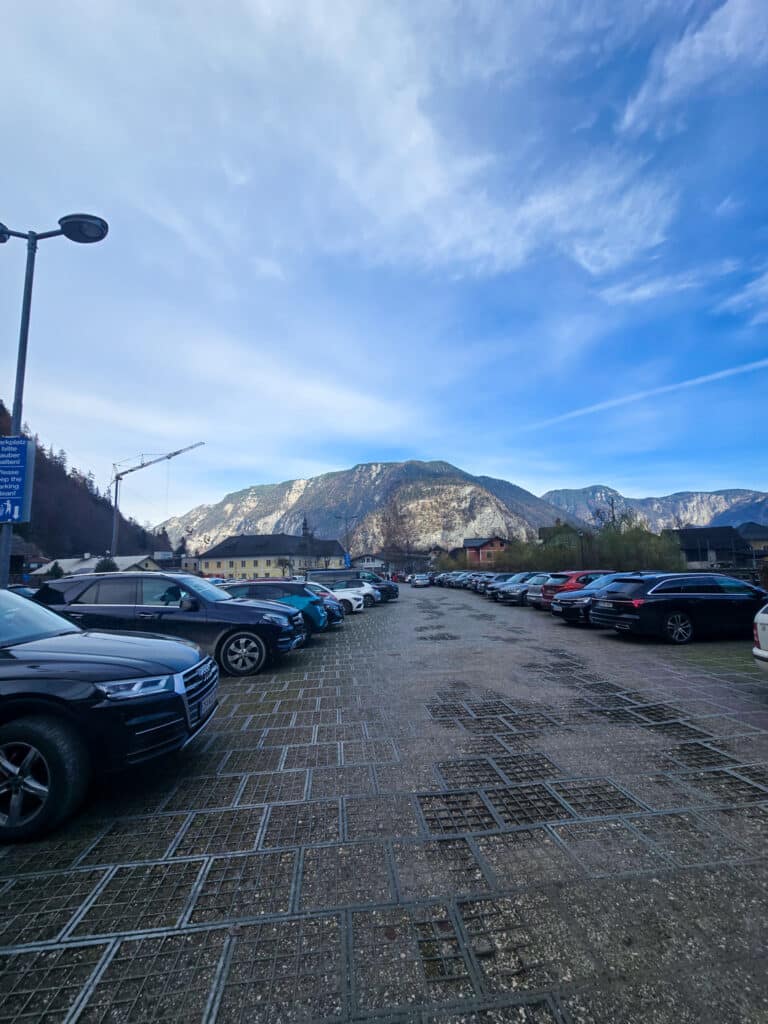
The Official Parking Areas in Hallstatt (P1–P4)
Hallstatt has four official parking areas designed to handle the entire volume of visitors. Because the historic village has almost no space for cars, all parking lots are located outside the center — but at different distances.
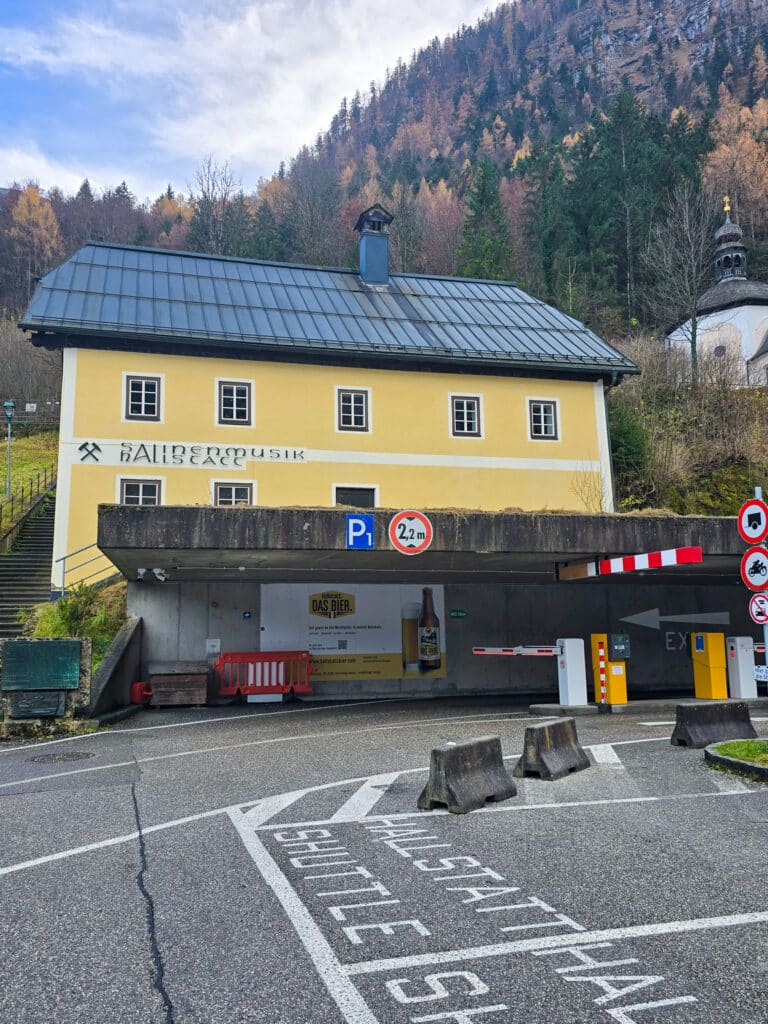
P1 – Main Parking Lot (largest, closest to the village)
Location: Directly at the village entrance near the Salinen area
Best for: Day visitors, families, guests heading into the old village
Key points:
-
Shortest walk into the village (approx. 8–12 minutes)
-
Usually the first lot to fill up in peak season
-
Ideal for visitors who want to explore Hallstatt efficiently
P2 – Parking at the Salt Mine Cable Car
Location: Below the Salzberg funicular
Best for: Visitors heading to the Salt Mine, Skywalk, or mountain railway
Key points:
-
Longer walk to the center (approx. 15 minutes)
-
Perfect if you plan to visit the Skywalk/Salt Mine first
-
Often used as the second option when P1 is full
P3 – Overflow / Additional Parking
Location: In the direction of Obertraun
Best for: High-traffic days; not ideal for casual village visits
Key points:
-
Used mainly to relieve pressure on peak travel days
-
Minimal infrastructure, but clearly signposted
P4 – Bus & Group Parking Area
Location: On the edge of Hallstatt toward Bad Goisern
Best for: Tour buses and large groups
Key points:
-
Mandatory parking zone for buses — the center is off-limits
-
Strict arrival/departure time slots
-
Staff on site checks reservations and compliance
Important Note for All Visitors
Throughout Hallstatt, the same rules apply:
First 15 minutes are free, then tiered parking fees apply
No reservations possible — parking operates strictly on a first come, first served basis
Fees, Rules & Access Restrictions in Hallstatt
Parking in Hallstatt follows a clearly structured system designed to prevent congestion and overloading. For visitors, this means one thing: knowing the rules saves time and avoids unnecessary fines.
Parking Fees
Fees vary slightly depending on duration, but the structure is nearly identical across all official parking areas.
-
0–15 minutes: free
-
1 hour: short-term rate (higher hourly fee)
-
2–4 hours: ideal for a brief visit or short walk through Hallstatt
-
5–12 hours: standard rate for day visitors
-
13–24 hours: full-day ticket
-
Lost ticket: flat-rate penalty fee
Important:
Prices are adjusted occasionally, but the structure remains consistent year to year. Always check the current rate at the ticket machine or display on-site.
Access Restrictions & Traffic Guidance
Hallstatt allows regulated access only, especially during daytime hours. This protects the historic village center and ensures pedestrian safety.
Key points:
-
The village center is closed to through traffic.
Only residents, shuttles, delivery vehicles, and authorized cars may enter. -
“Just driving in to turn around” is not permitted.
The road is too narrow for safe maneuvering. -
Access may be blocked during peak times.
When P1 or P2 fill up, drivers are redirected before reaching the village. -
Bus terminal access is strictly controlled.
Buses may stop briefly to drop off/pick up passengers, then must leave immediately.
Controls & On-Site Traffic Management
Hallstatt runs its own monitoring system:
-
Staff is stationed at traffic choke points observing buses and cars
-
Bus drivers must present their pre-booked time slots
-
Visitors are guided to alternative parking areas and routes
-
Illegal parking is photographed and reported immediately
Typical Fines & Penalties
The municipality enforces parking rules very strictly. Common consequences include:
-
Warnings or fines for parking without a valid ticket
-
Photos taken of illegally parked vehicles for official reporting
-
Higher penalties for blocking or entering restricted zones
Hallstatt is small — which is precisely why authorities work proactively to prevent any traffic issues before they escalate.
Alternative Parking Options & Backup Plans (When Everything Is Full)
Hallstatt often reaches full parking capacity by late morning, especially in peak season. That’s why having a Plan B is essential. The good news: There are several realistic alternatives that work smoothly — and in many cases are even more relaxed than parking directly in Hallstatt.
Alternative 1: Parking in Obertraun (Fastest & Most Relaxed Option)
Obertraun is only a few minutes from Hallstatt and offers several large parking areas that rarely fill up.
Advantages:
-
Significantly more available spaces
-
Calm, easy access without traffic stress
-
Often cheaper or free
-
Multiple connections to Hallstatt via bus, train, or on foot
Options:
-
Obertraun train station → continue by train + ferry to Hallstatt
-
Village parking areas → bus toward Hallstatt
-
Lakeside walking path (45–60 minutes) — very scenic in good weather
Ideal for:
Day visitors who want flexibility and want to avoid parking pressure.
Alternative 2: Parking in Bad Goisern
Bad Goisern is slightly farther away but provides multiple large parking areas.
Advantages:
-
High capacity
-
Rarely full
-
Good public transport links to Hallstatt
How to continue:
Take the bus toward Hallstatt Lahn, then walk a few minutes into the center.
Alternative 3: Park & Ride + Public Transport
If you prefer not to drive into Hallstatt at all, you can rely on:
-
Train to Hallstatt station. → ferry to the village
-
Buses from Bad Ischl, Obertraun, Gosau
-
Seasonal shuttle buses
This option is especially useful during peak hours, when the road to Hallstatt becomes slow and crowded.
Alternative 4: Drop-Off Only (Strictly Allowed at P1)
For private drivers (friends, family, or rental cars):
-
Short drop-offs are allowed only at P1, not in the village center.
-
Driving “just to turn around” inside the village is forbidden and strictly controlled.
-
After drop-off, the driver must leave and park outside the village.
When EVERYTHING Is Full – What Really Happens & What to Do
During heavy visitor traffic (weekends, holidays, summer), this is the typical sequence:
-
P1 full → access blocked
-
P2 full → immediate redirection before the village
-
P3/P4 activated → overflow system
-
If overload continues → full road closure to Hallstatt
Best course of action:
-
Do not try to drive further — access will be denied.
-
Immediately switch to Obertraun or Bad Goisern for parking.
-
Continue by bus/train or return by car (10–15 minutes) to the village entrance.
For Tourists Using Rental Cars: Avoid Any Risk
Rental car companies charge administrative fees (€25–35) on top of the actual fine if a violation is forwarded from Hallstatt.
The municipality documents illegal parking thoroughly — photos, digital reports, and automated processing — so it’s best not to take any chances.
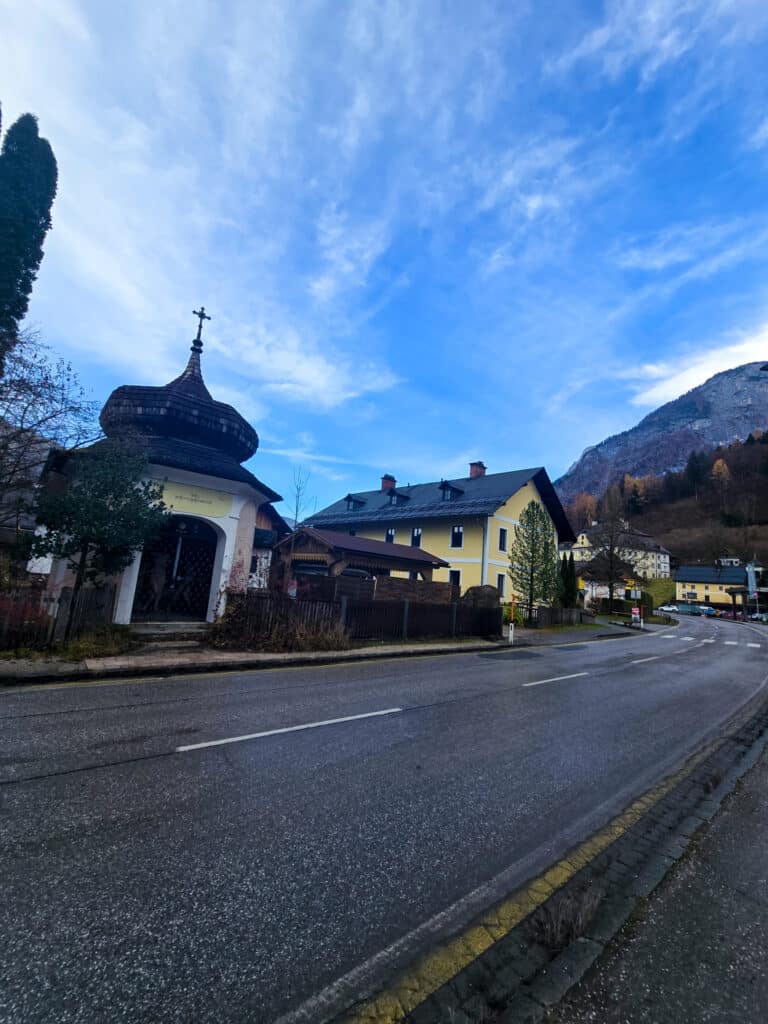
Practical Tips for a Stress-Free Trip to Hallstatt
Hallstatt is breathtaking — but the arrival can become chaotic if you show up unprepared. These tips come from real on-the-ground experience (thousands of visitors per year, feedback from drivers and guides) and help you make the most of your time in the village.
Tip 1: Arrive Early – Ideally Before 09:00
Between 09:30 and 12:00, P1 and P2 are almost always full.
Arriving early helps you avoid:
-
Traffic at the village entrance
-
Waiting times
-
Being redirected to Obertraun
-
Long searches for parking
Early arrival = the best strategy.
Tip 2: When in Doubt, Head Straight to Obertraun
If staff on the road indicate that P1/P2 are full, don’t try to “squeeze in anyway.”
You will be turned away.
Driving directly to Obertraun is usually faster, easier, and far less stressful.
Tip 3: Visit the Salt Mine / Skywalk First
The most efficient plan is:
-
Park at P2
-
Take the funicular up to the Skywalk
-
Walk down toward the village afterward (easy, scenic route)
This route is far more relaxed than starting in the center and walking up later.
Tip 4: Never Attempt to Drive into the Village Center
The center is:
-
extremely narrow
-
full of pedestrians
-
secured with posts and restricted zones
-
strictly monitored
Large vehicles and buses are photographed and reported immediately if they enter prohibited areas.
Tip 5: Buses Must Have Arrival & Departure Slots
For groups, the system includes:
-
a digital arrival window
-
a departure window
-
mandatory registration
-
on-site checks by terminal staff
Bus drivers without a valid slot will be turned away.
Tip 6: Allow Extra Time in Bad Weather
Rain, snow, construction, or temporary closures on narrow roads can add 10–20 minutes to your travel time.
Plan a buffer — especially if you’re continuing to another destination afterward (e.g., Salzburg or Innsbruck).
Tip 7: For the Most Relaxed Experience — Consider a Private Tour
If you prefer to avoid traffic and parking stress, a private driver/guide offers clear advantages:
-
no parking hassle
-
better time management
-
optimized scenic stops (St. Gilgen, Lake Wolfgang, etc.)
-
local expertise
-
stress-free experience for families
Often more enjoyable than driving yourself.
Tip 8: Don’t Overplan Your Stay — 2–3 Hours Is Enough
For most visitors, this is sufficient:
-
30–45 minutes walking through the village
-
photos at the lake & market square
-
20–30 minutes for the church & ossuary
-
a café stop or short lakeside walk
Many people assume they need 4–6 hours, but the old town is small.
Tip 9: In Cold Weather, Plan Warm-up Spots
Hallstatt can be very cold and windy in autumn/winter.
Good warm-up options:
-
cafés in the old town
-
lake viewpoints
-
your car (if parked near P1)
For groups: agree on meeting points in advance.
Tip 10: Restrooms Are Limited — Make a Stop Beforehand
Around P1, P2 and in the village center, restroom facilities are limited.
During peak season, queues are common.
Recommendations for Different Types of Visitors
Depending on how you travel and what you want to experience in Hallstatt, the ideal parking and arrival strategy can differ significantly. This section provides clear, objective recommendations so every visitor type can enjoy a smooth and stress-free visit.
For Self-Drivers (Own Car or Rental Car)
Recommendation: Arrive early + use P1 or P2
-
Leave before 09:00 → highest chance of securing P1
-
Visiting the Skywalk / Salt Mine? → go directly to P2
-
If “FULL” signs appear: don’t wait — drive straight to Obertraun
Why?
Self-drivers are the most affected by traffic, redirections, and closed parking lots. Early arrival = best experience.
For Families with Children
Recommendation:
-
P1 (shortest walk into the village), or
-
Park in Obertraun + take the bus/train to Hallstatt
Why?
Families benefit from short distances, safe pedestrian routes, and predictable starting points. Obertraun is ideal with strollers or lots of luggage — quiet, spacious, easy to navigate.
For Photographers & Content Creators
Recommendation: Arrive very early or very late
-
Sunrise = perfect lake reflections
-
Parking is rarely an issue
-
Avoid the daytime crowds
Why?
Hallstatt is extremely crowded mid-day, making many photo spots difficult or impossible to access.
For Groups up to 7 People (Minivan / Private Tour)
Recommendation: Private driver-guided tour or a single minivan parked at P1
-
Minivans are flexible, maneuverable, easy to park
-
No dealing with bus rules or time slots
-
No discussions with traffic staff
Why?
Small groups benefit the most from private tours — no parking hassle, no time lost, and full itinerary flexibility.
For Large Groups & Tour Buses
Recommendation: Official bus terminal + mandatory slot system
-
Two required time slots: arrival & departure
-
Use the bus terminal → afterward the bus moves to P4
-
Return only at the booked pickup time
Why?
Hallstatt enforces bus rules very strictly. Buses without confirmed slots are turned away and may disrupt the entire day’s schedule.
For Winter Visitors
Recommendation:
-
Prefer P1 (paths uphill to P2 can be icy)
-
Bring gloves & warm layers (cold lakeside wind)
-
Plan extra time for weather delays
Why?
Winter days are short, colder, and often slippery — starting in the lower village area is safer and easier.
For Summer Visitors
Recommendation:
-
Arrive before 09:00 or after 04:30
-
Keep alternatives (Obertraun / Bad Goisern) in mind
-
Bring plenty of water — narrow paths, little shade
Why?
Summer is peak season: heavy traffic, full parking lots, crowded restaurants and viewpoints.

Arrive Relaxed, Experience More
Hallstatt is one of the most beautiful places in Austria — but because it sits tightly between mountain and lake, it is also one of the most challenging when it comes to parking.
With only a few official parking areas (P1–P4), strict access regulations, a controlled bus system, and very high visitor numbers, good preparation is essential.
Those who arrive early, understand the official parking system, and plan alternatives such as Obertraun will enjoy a far more relaxed visit. Self-drivers and families especially benefit from clear routes, well-timed schedules, and flexible parking options. Bus groups must follow slot rules, photographers should arrive very early, and in bad weather it’s wise to plan extra time.
The bottom line:
The better the day is planned, the better Hallstatt becomes.
Hallstatt rewards every visitor — no matter how you arrive. But because infrastructure is limited, parking is not a side topic; it is a central part of your trip planning.
Those who know the rules and make smart decisions save time, avoid stress, and prevent unnecessary fines. A calm, organized start to the day allows you to experience Hallstatt the way it is meant to be: peaceful, impressive, and without haste.
If you want to avoid the entire parking situation altogether, private day trips with a driver/guide are an excellent option. No parking search, no logistics — and you can enjoy Hallstatt with flexible scenic stops such as St. Gilgen, Lake Wolfgang, or Golling.
You can find more details and available options right here.