

Mother, Sister, Muse: The Hidden Mozart Legacy in St. Gilgen
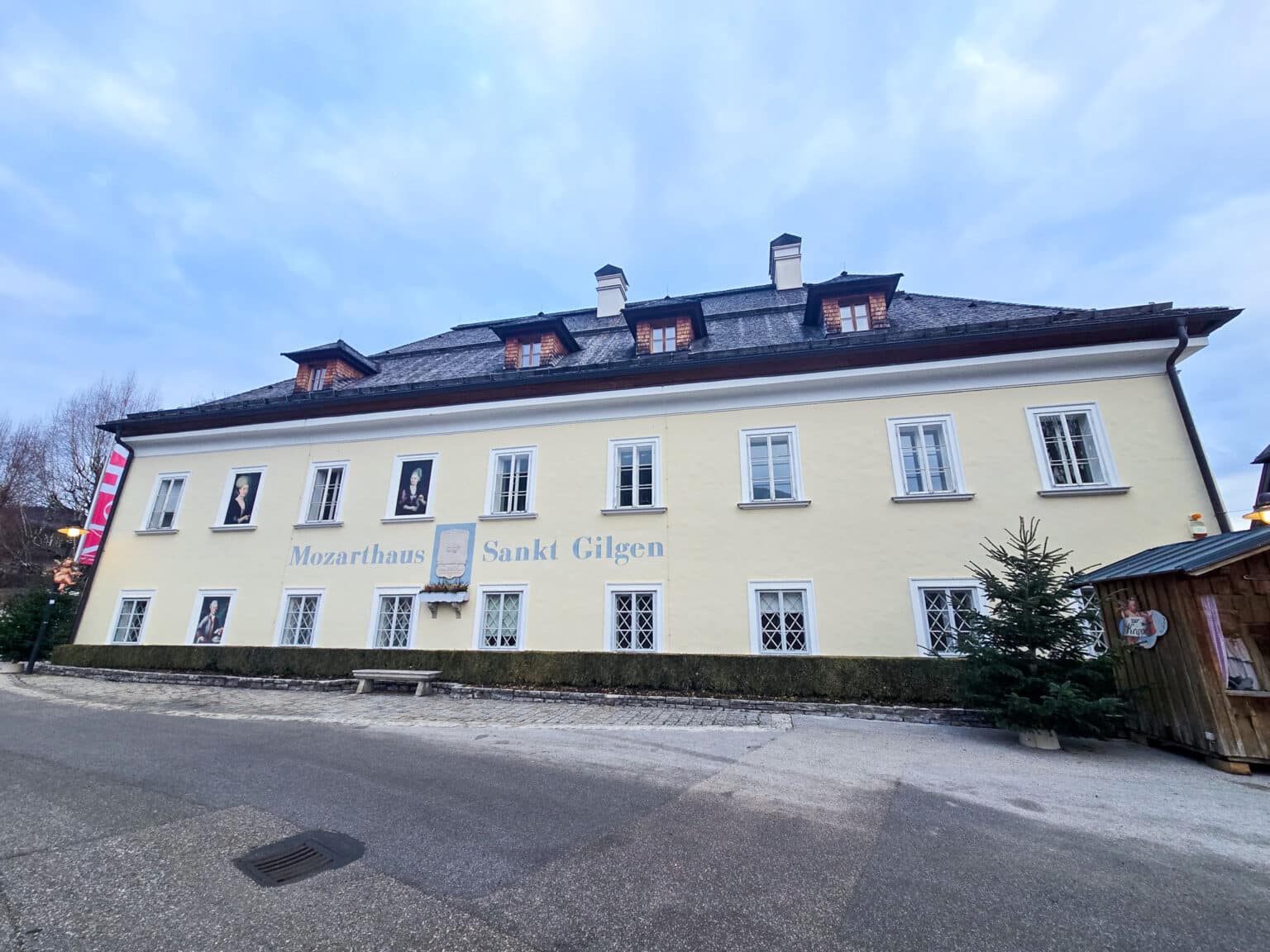
St. Gilgen on Lake Wolfgangsee carries the moniker “Mozart Village” with a nostalgic elegance that captivates visitors from all over the globe. Yet, as one wanders through the cobblestone alleys of this idyllic town searching for the direct footsteps of the prodigy Wolfgang Amadeus, one soon discovers a surprising truth: the musical genius himself likely never set foot in this house.
And yet, the historical significance of the Mozart House St. Gilgen for understanding the Mozart family is of immeasurable value. It is not a museum of dry facts, but a stage for the women who lived in the shadow of genius and yet significantly shaped its course.
Those seeking the authentic, unadulterated Salzkammergut must look behind the Baroque façade of the former district court (Pfleggericht). This building, steeped in history and situated directly on the northern shore of Lake Wolfgangsee, tells a story of family bonds, societal expectations, and the deep roots of a global brand within the rural idyll of Salzburg.
For travelers who value intellectual depth and exclusive experiences, this site is far more than a simple stopover—it is the centerpiece of a cultural journey through one of Europe’s most beautiful regions.
In this comprehensive guide, we lead you through the eras of a house that, like few others, reflects the duality between glamorous music history and the harsh reality of provincial life in the 18th century.
The Architecture of Power: The Baroque Manorial Palace as an Administrative Jewel
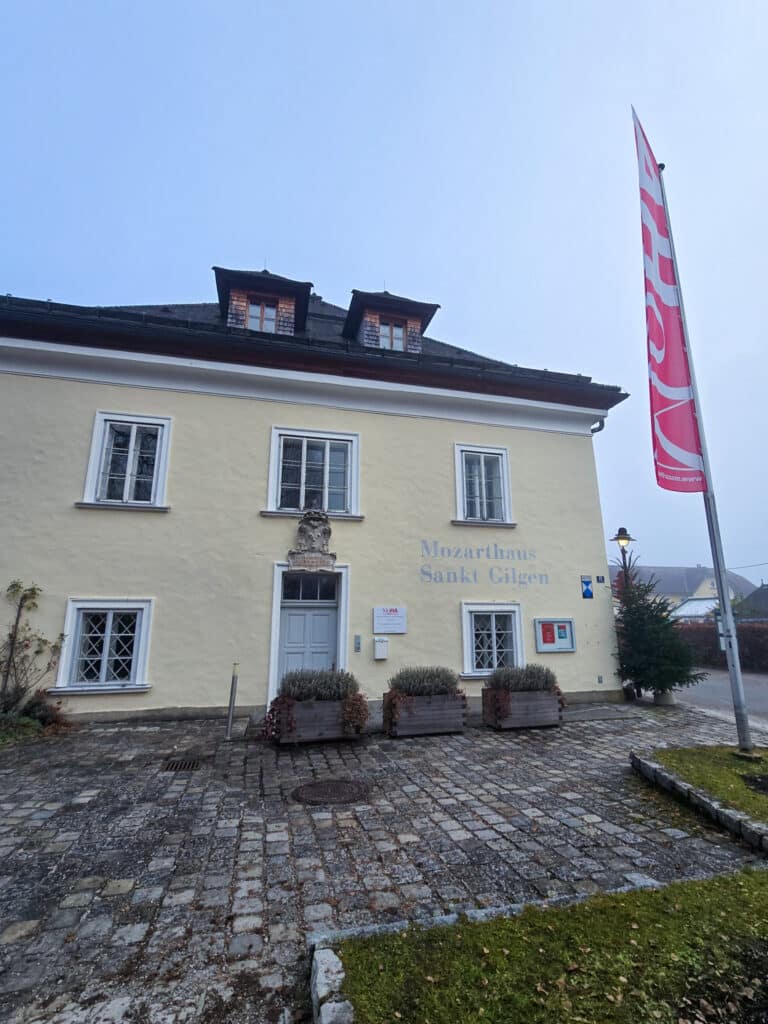
To fully grasp the aura of the Mozart House, one must understand its original purpose as an administrative center. The building, as it stands today on the northern shore of Lake Wolfgangsee, is no product of chance; it is an architectural statement of the early 18th century. It was constructed between 1718 and 1720 by Wolfgang Nikolaus Pertl, the grandfather of Wolfgang Amadeus Mozart.
In his role as the presiding district judge (Pflegrichter) of the Archbishopric of Salzburg, Pertl was not merely a high-ranking administrative official but also the region’s chief magistrate—a position of significant power and social prestige that demanded a suitably representative residence.
The house was conceived as an official Pfleggericht (district court), a combination of administrative office and private residence typical of the Salzburg region. The architecture reflects this functional dualism in every facet: the massive, almost fortress-like walls and the magnificent, centrally positioned portal were designed to unmistakably represent the authority of the Prince-Archbishop of Salzburg.
At the same time, the Baroque stylistic elements and the spacious interior layout underscored the private wealth and cultural aspirations of the Pertl family.
For connoisseurs of Baroque architecture, the characteristic wrought-iron window baskets and the harmonious proportions of the façade are particularly striking. These details are typical of the rural administrative buildings from the era of Prince-Archbishop Franz Anton von Harrach, who significantly shaped the Baroque landscape of Salzburg.
The façade avoids excessive opulence, relying instead on strict symmetry and clear lines, lending the building a timeless elegance.
Standing before the building today, one looks upon a monument of permanence that marks the transition from High Baroque to the slightly lighter formal language of the early 18th century.
Its strategic location directly on the lakeshore was no coincidence; it allowed guests from the city of Salzburg—who often avoided the arduous overland routes in favor of the waterway—to arrive in a style befitting their rank, while simultaneously symbolizing administrative control over the region’s most important trade artery.
For today’s observer, the Mozart House represents a rare example of an almost perfectly preserved Pflegschloss (manorial palace). Its original structure has been conserved over centuries, offering an authentic glimpse into the lives of Salzburg’s upper-class officials during the height of the Baroque era.
Anna Maria Pertl: The Birthplace of the Genius’s Mother
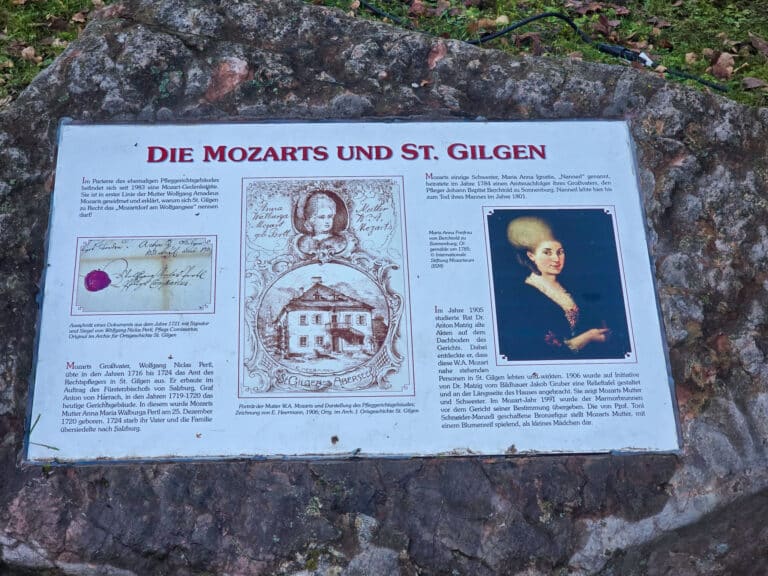
Behind the magnificent walls of the district court lies a biographical sensation that is often overshadowed by her son’s global career in Vienna: this house is the birthplace of Anna Maria Walburga Pertl, who entered the world exactly here on December 25, 1720.
Classical Mozart research frequently emphasizes the strict upbringing of his father, Leopold Mozart. However, to truly understand the personality of the prodigy Wolfgang Amadeus, one must examine the maternal line in the Salzkammergut.
Anna Maria grew up in the idyllic yet climatically rugged environment of St. Gilgen. Historical records and later correspondence describe her as a woman of remarkable humor, warmth, and deep emotional intelligence—traits she undoubtedly passed on to her son.
Her childhood in the Mozart House was shaped by her father’s high-ranking position as a district judge. However, following his early death in 1724, the family’s destiny shifted abruptly.
The former daughter of the powerful judge was forced to move to Salzburg with her mother, where she eventually met and married Leopold Mozart.
Today’s exhibition in the Mozart House dedicates a significant portion to this “Mother of Genius.” It is a tribute to a woman who, throughout her life, carried the down-to-earth nature and joie de vivre of her home on Lake Wolfgangsee in her heart. For visitors interested in the human side behind the musical history, this part of the house is particularly moving.
It impressively demonstrates that the Mozart phenomenon likely would never have existed in this form without this strong woman from the Salzkammergut. It is the story of a family whose roots were firmly anchored in the soil of St. Gilgen long before the glamour of the world’s great stages took hold.
The Fate of Maria Anna “Nannerl” Mozart: 17 Years Between Duty and Melancholy
The most moving aspect of the house’s history concerns Mozart’s sister, Maria Anna—affectionately known within the family as “Nannerl.” In her youth, she was considered just as gifted as her brother Wolfgang; together, they toured European metropolises as child prodigies, performing before the most significant rulers of their time.
However, while Wolfgang’s path led to artistic freedom and global fame in Vienna, Nannerl was bound by the relentless social conventions of the 18th century.
Following her marriage to the significantly older district judge Johann Baptist Berchtold zu Sonnenburg in 1784, she returned to St. Gilgen—to the very house where her mother had been born decades earlier.
Here, she spent 17 years of her life. She traded the role of a celebrated virtuoso for that of a judge’s wife, responsible for a large estate, five stepchildren from her husband’s previous marriages, and three children of her own.
Today’s exhibition in the Mozart House makes this often-overlooked female perspective of music history tangibly felt. In the Baroque rooms where official business was once conducted, one can sense the melancholy of a highly talented woman stranded in rural seclusion while her brother wrote musical history.
Her piano playing, which once enchanted Paris and London, now resonated in St. Gilgen only for a small circle of local dignitaries.
The memorial’s multimedia installations, based on original diary entries and letters, are particularly valuable for providing historical depth. They document Nannerl’s daily life between domestic duties, concern for her children, and a constant longing for the cultural brilliance of Salzburg.
Since the comprehensive redesign of the house in 2005, the museum has succeeded in making this emotional struggle not just an exhibit, but a profound experience for the modern visitor. It is the story of a strong woman who bore her fate with dignity, and whose presence can still be felt in every corner of the house today.
From Administrative Office to Cultural Center: The Rescue and Transformation of the Memorial Site
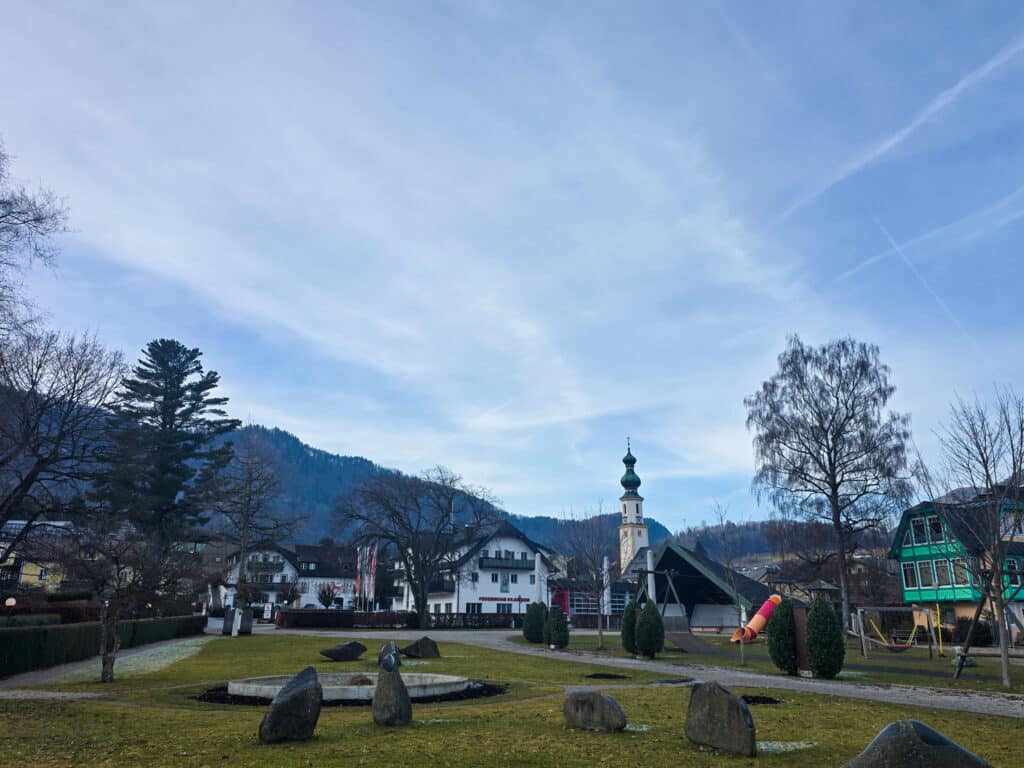
The fact that the Mozart House shines in such splendor today was by no means a certainty. After the era of the district judges came to an end, the historic building was at times threatened by insignificance or even decay. It was only through an unprecedented private initiative and the founding of the “Mozarthaus St. Gilgen Cultural Association” that this architectural jewel could be saved.
The comprehensive renovation and redesign in 2005 marked a turning point: the goal was to move away from a dusty memorial site toward a modern, vibrant cultural center.
Today, the house presents itself as one of the most modern museum facilities in the Salzkammergut. The curators have succeeded in merging the Baroque structure with contemporary presentation technology. Rather than showing only static display cases, the Mozart House relies on a multi-sensory experience.
High-quality listening stations allow visitors to immerse themselves in the world of the 18th century by quoting from original letters and diary entries of the Mozart family. This acoustic layer gives the historic rooms a depth that goes far beyond the visual.
But the transformation went even further.
The former service wing and the main rooms were adapted to serve today as a stage for international chamber music and contemporary art. This symbiosis of respect for history and the courage for modernity makes the house a flagship project for regional cultural work.
A place has been created that not only conserves the past but actively contributes to the cultural identity of Lake Wolfgangsee. For travelers, this means that a visit to the Mozart House is never the same—rotating special exhibitions and a dynamic program of events ensure that the house reveals new facets with every visit.
A Venue for Exclusive Encounters: Concerts, Weddings, and Seminars
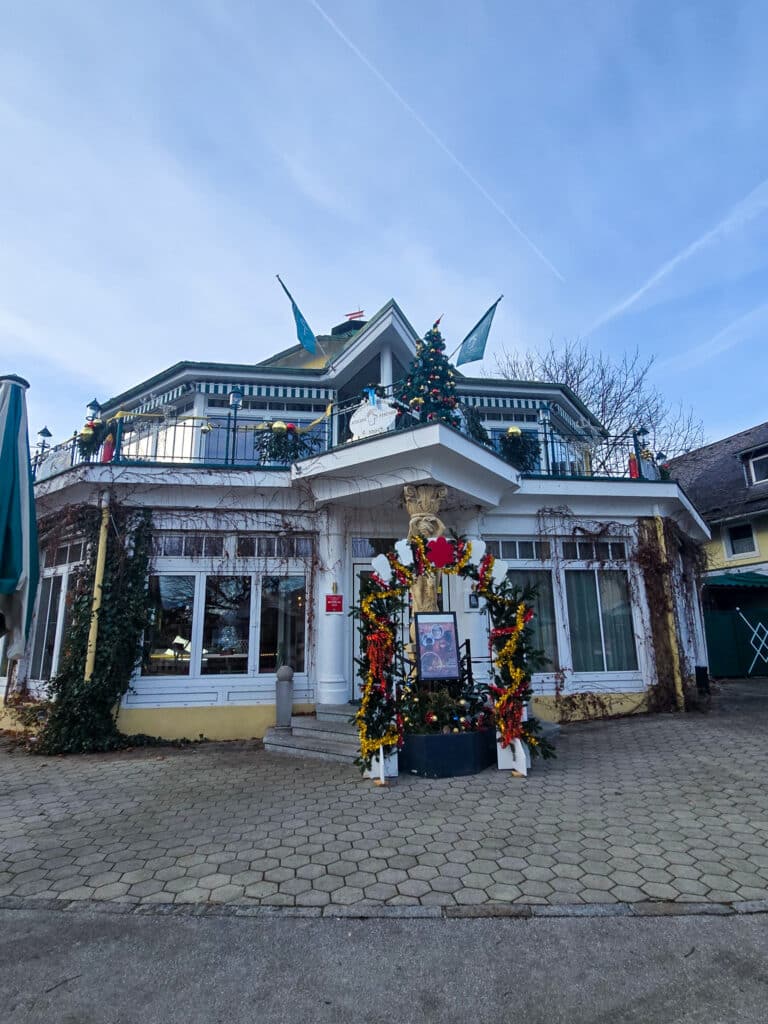
The Mozart House St. Gilgen has long established itself beyond its museum character as one of the most exclusive event locations in the Salzkammergut. The centerpiece for events is the magnificent Baroque ballroom, which—with its unique acoustics and historic ambiance—provides a setting that modern conference centers simply cannot replicate.
With a capacity for up to 200 people, the house offers the ideal space for high-caliber chamber music evenings, reminiscent in their intimacy of the private soirees of the Mozart era.
The Mozart House holds a particularly prominent position in the world of destination weddings. Couples from across the globe choose this historic jewel on Lake Wolfgangsee to exchange vows in an environment that breathes elegance and history.
The combination of its immediate proximity to the lakeshore and the stately aura of the former manorial palace makes every wedding a social event of lasting significance.
The house is also a premier address for the business sector. Discerning companies utilize the premises for seminars, board meetings, or exclusive evening events. The tranquility of the location, paired with state-of-the-art event technology discreetly integrated into the Baroque structure, creates an atmosphere of peak concentration and inspiration.
Planning an event here is a statement of style and quality. For the logistics of such occasions, this often entails guests arriving from the city of Salzburg or Munich Airport—an exclusive framework that begins the moment participants arrive and requires seamless, professional coordination.
Thus, the Mozart House becomes a crossroads where culture, commerce, and lifestyle meet at the highest level.
Experience Lake Wolfgangsee Culturally: Insider Tips for Your Stay in St. Gilgen
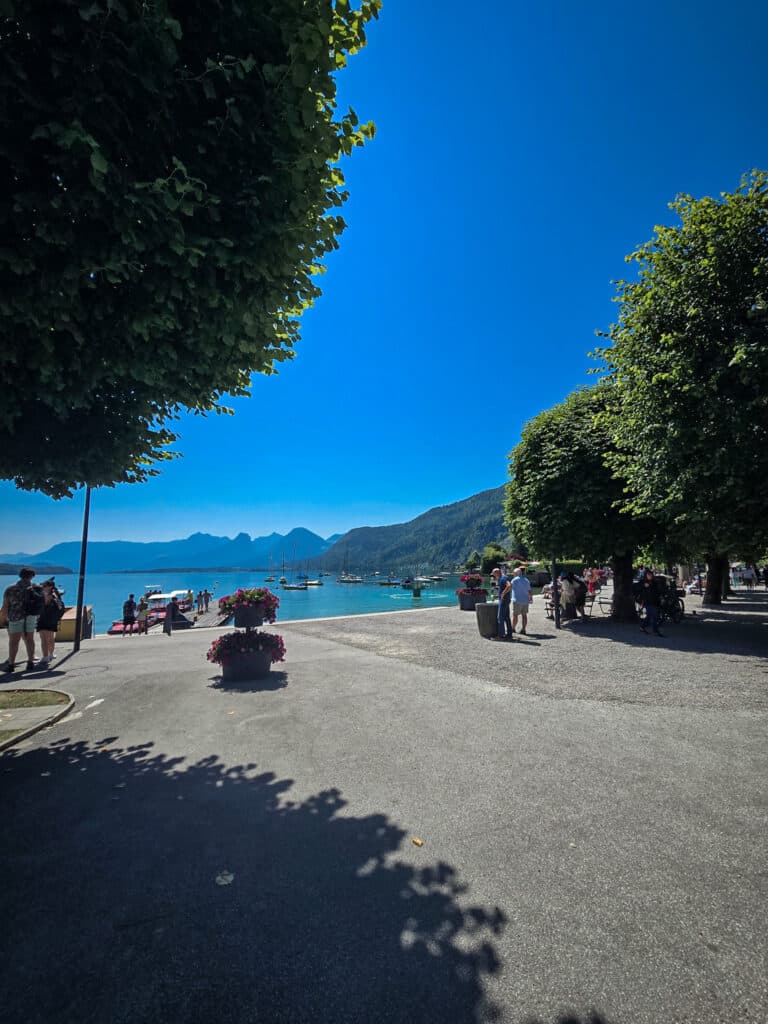
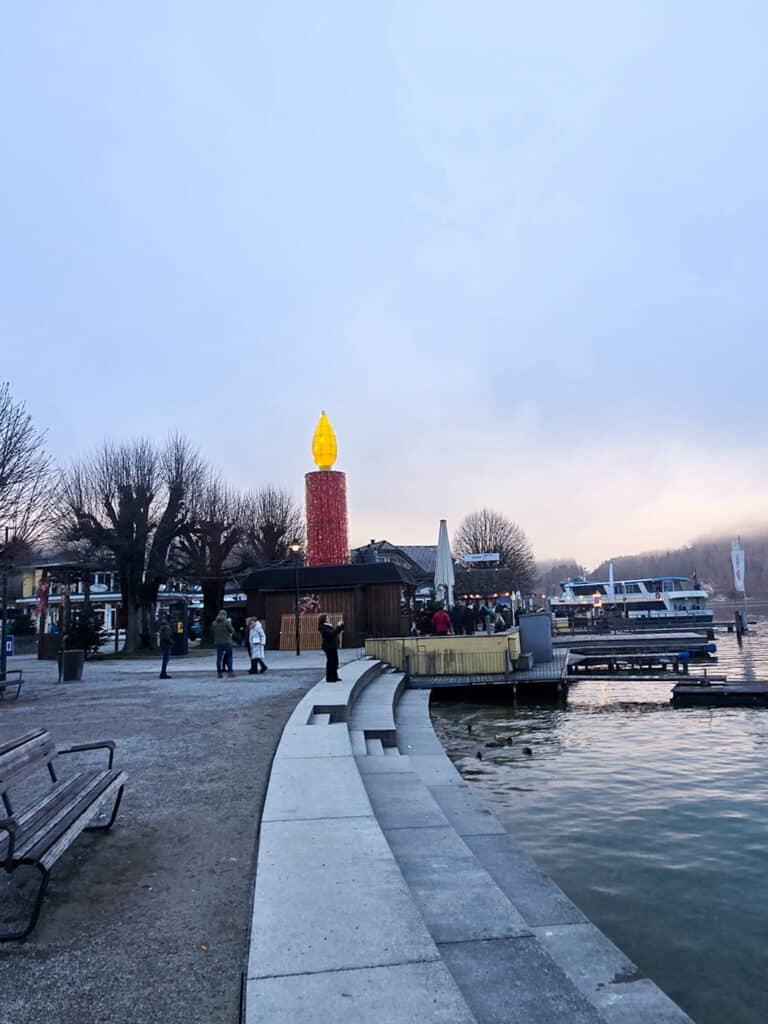
A visit to the Mozart House can be perfectly integrated into a comprehensive day itinerary that combines the town’s cultural depth with the natural beauty of the Salzkammergut. St. Gilgen is a place of short distances, making it easy to combine various highlights without any time pressure. After following the footsteps of the Mozart family, you will find the Lake Wolfgangsee shipping pier just a few minutes’ walk away.
A boat trip to St. Wolfgang not only offers spectacular views of the Falkenstein massif but also connects two of the region’s most significant cultural sites via the most beautiful route imaginable—the waterway.
For travelers seeking the contrast between Baroque architecture and alpine freedom, a combination with the Zwölferhorn cable car is essential. Within minutes, you ascend from the historic town center to the summit, where a panorama stretches across the entire Salzkammergut to the Dachstein Glacier.
It is precisely this transition between the intellectual depth of the Mozart House and the vastness of the mountains that defines the charm of St. Gilgen.
Another insider tip for culture lovers is a visit to Atelier Fischer. Here, you can experience local craftsmanship at a level that perfectly translates regional tradition into modernity. For those seeking a moment of reflection, a visit to the St. Gilgen cemetery is recommended.
While it does not house the grave of Nannerl Mozart (she is buried in Salzburg), it is the final resting place of her grandmother and other companions of the family.
It is these small, often overlooked details that turn an excursion into a true experience for connoisseurs. We recommend planning your visit to the Mozart House for the morning to enjoy the tranquility of the rooms before dedicating the afternoon to exploring the surrounding nature and the lake.
The Completion of the Excursion: Arrival with Discreet Comfort and Style
A visit to the Mozart House St. Gilgen is far more than a mere sightseeing stop—it is an immersion into a world of elegance and historical significance. To ensure this experience begins long before you arrive, discerning travelers choose a mode of transport that reflects the cultural prestige of the day.
The route from the Mozart City of Salzburg out to Lake Wolfgangsee is considered one of Austria’s most picturesque journeys. However, by bypassing the unpredictability of public transport or the tedious search for parking in the narrow, heritage-protected alleys of St. Gilgen, you gain valuable time and peace of mind.
Instead of keeping one’s eyes on a timetable or the dense traffic along Lake Fuschl, you are brought directly to the stately portal of the former manorial palace by your private driver. Within the discreet atmosphere of a luxury limousine or an exclusive van, relaxation begins the moment the doors close.
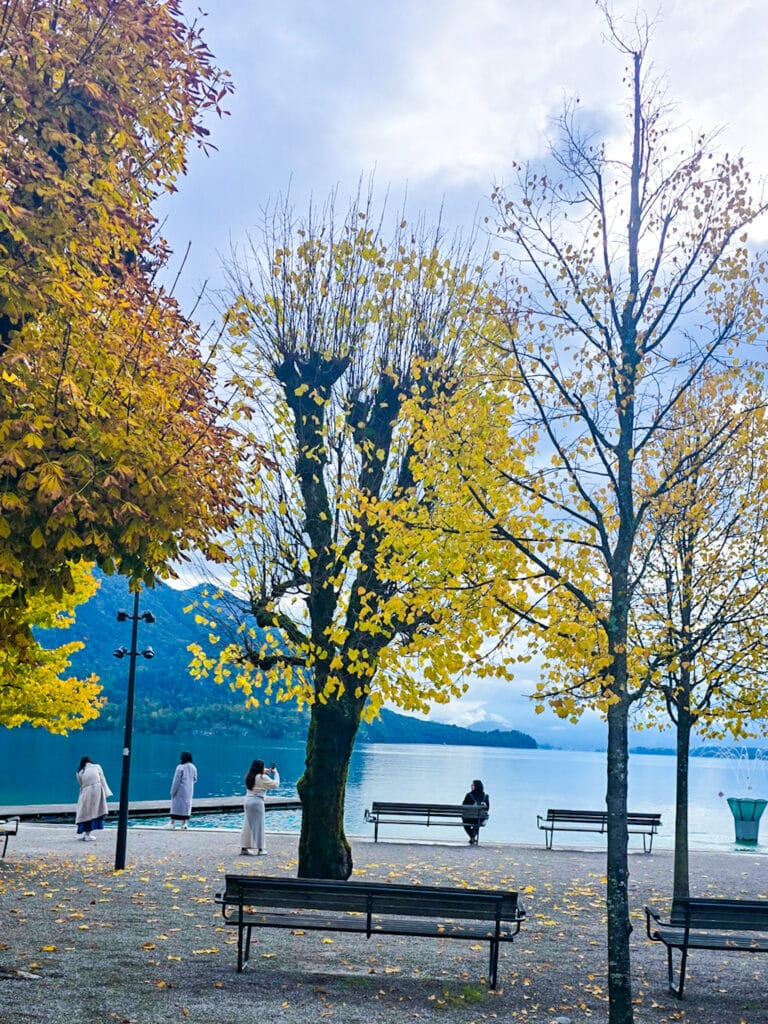
As the landscape of the Salzkammergut—past the emerald-green Lake Fuschl and the striking peaks of the Osterhorn group—glides by your window, there is space to mentally prepare for the story of Nannerl and Anna Maria Mozart.
This small luxury of flexibility means you can shape the day according to your own rhythm.
Whether you wish to spontaneously add a stroll along the lakeshore after the museum tour or extend your stay for a leisurely lunch, a private tour guarantees that the return journey is as seamless and stress-free as your arrival.
It is the completion of a perfect cultural day, where the comfort of the journey transitions effortlessly into the excellence of the destination. Those who appreciate style do not leave the path to chance; they enjoy the certainty that every kilometer of the trip is as first-class as the destination itself.