

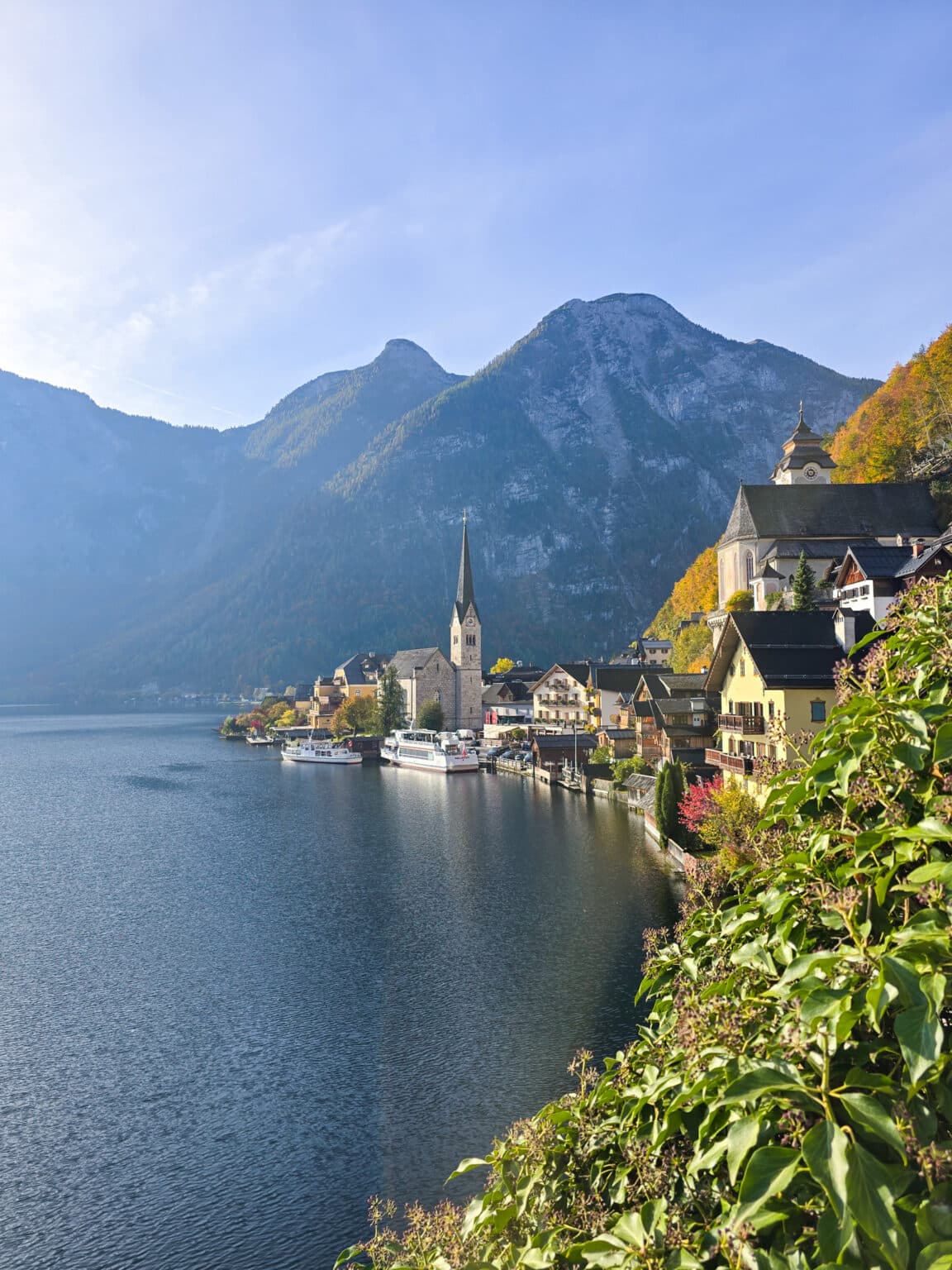
Hallstatt Between Idyllic Beauty, Instagram, and Overload
Hallstatt has long become more than a village—it is a symbol. A place of longing, appearing on postcards, in global marketing campaigns, and across millions of Instagram feeds worldwide. And yet, only around 760 people actually live here, surrounded by a world that arrives daily as a visitor.
Each year, the UNESCO World Heritage village welcomes more than one million guests. On peak days, up to 10,000 visitors crowd through its narrow lanes between lake and rock face.
What was once defined by silence and craftsmanship has become a global phenomenon: tour buses arriving by the minute, cameras lining the lakeshore, drones hovering above rooftops. For many travelers, Hallstatt remains a dream destination—for many locals, it has become a delicate balancing act between home and stage.
Overtourism here is not a buzzword; it is lived reality. At the same time, it marks a turning point. Hallstatt has become a case study in how a world-famous place can reinvent itself—through rules, limits, and a clear vision for the future.
This article explores how Hallstatt became a symbol of mass tourism, which measures the municipality has introduced in response, and how the village is working to preserve its authenticity without losing the visitors who are drawn to it.
How Serious Is the Problem Really?
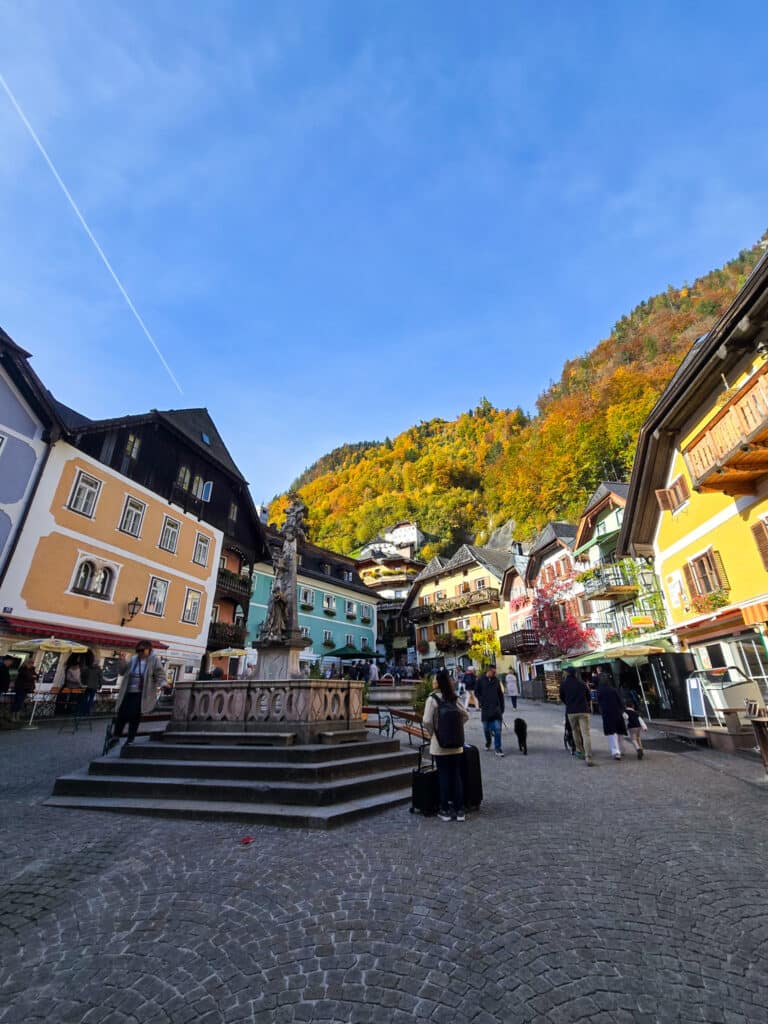
Hallstatt is a village of around 760 residents—yet it attracts more than one million visitors every year, a ratio few places in the world can match. Statistically, that’s over 1,300 visitors per resident annually, and on peak summer days up to 10,000 people crowd the narrow lanes between lake and rock face.
Most arrive on day trips: early in the morning by coach or rental car from Salzburg, Vienna, or Munich — stroll through the historic center, take the iconic photo by the lakeshore, grab a coffee—and leave again by afternoon. Only a small share stays overnight, concentrating the pressure into just a few hours each day.
For locals, this creates a daily cycle between calm and exception. Mornings are still quiet; from around 10 a.m., the village becomes crowded, noisy, and hectic—until the original sense of place returns in the evening.
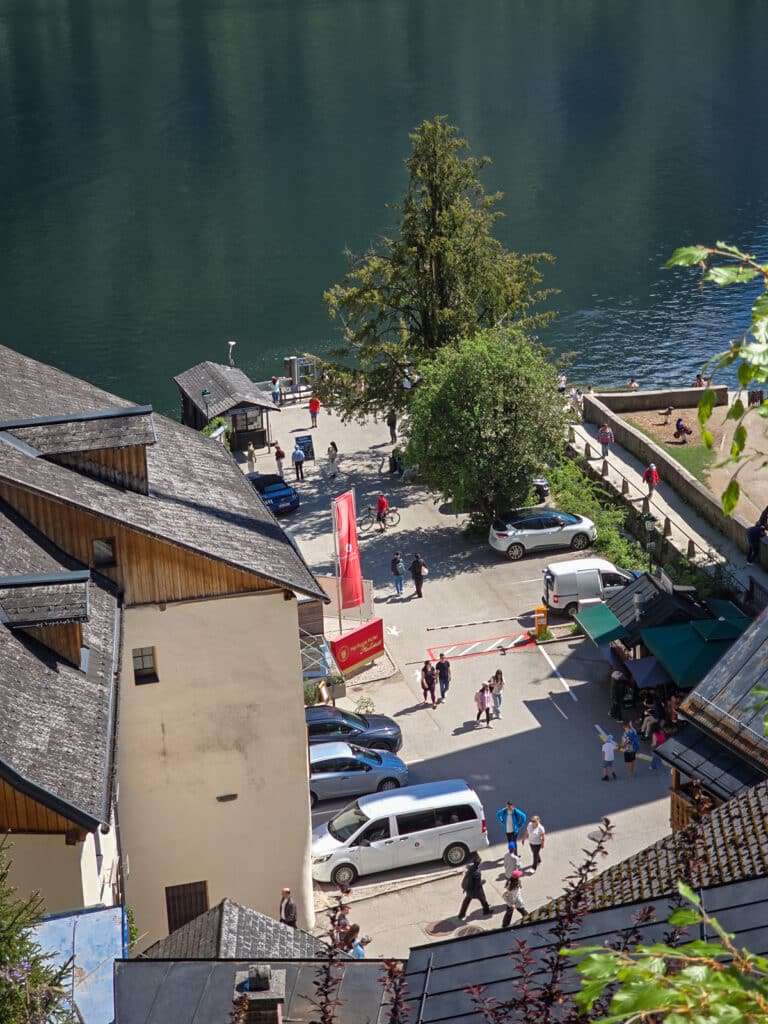
Infrastructure struggles to keep pace with this rhythm. Parking is scarce, buses block access road, and the historic core has long reached its limits. At the same time, tourism has become the primary livelihood—many residents work in hotels, cafés, or transport.
Hallstatt thus embodies a central dilemma of modern travel: how can a place remain authentic when it becomes a daily stage? The tightrope walk between economic success and protecting everyday life is more visible here than almost anywhere else in Austria—making Hallstatt a case study for the future of Alpine tourism.
Why Hallstatt Became So Overcrowded
Hallstatt’s rise from a quiet Alpine village to a global travel icon was no accident—it was the result of a modern success story that took on a life of its own. Within just a few years, Hallstatt became a symbol of the “perfect Europe”: a village that looks as if it stepped straight out of a fairytale.
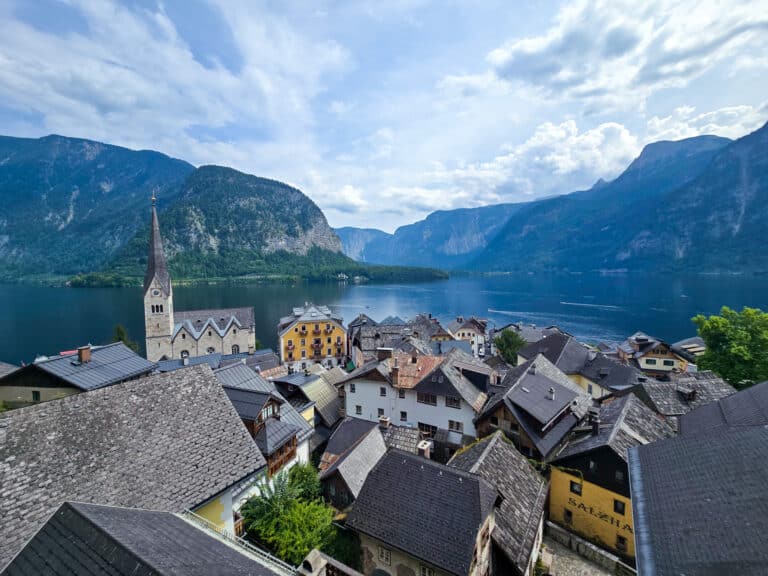
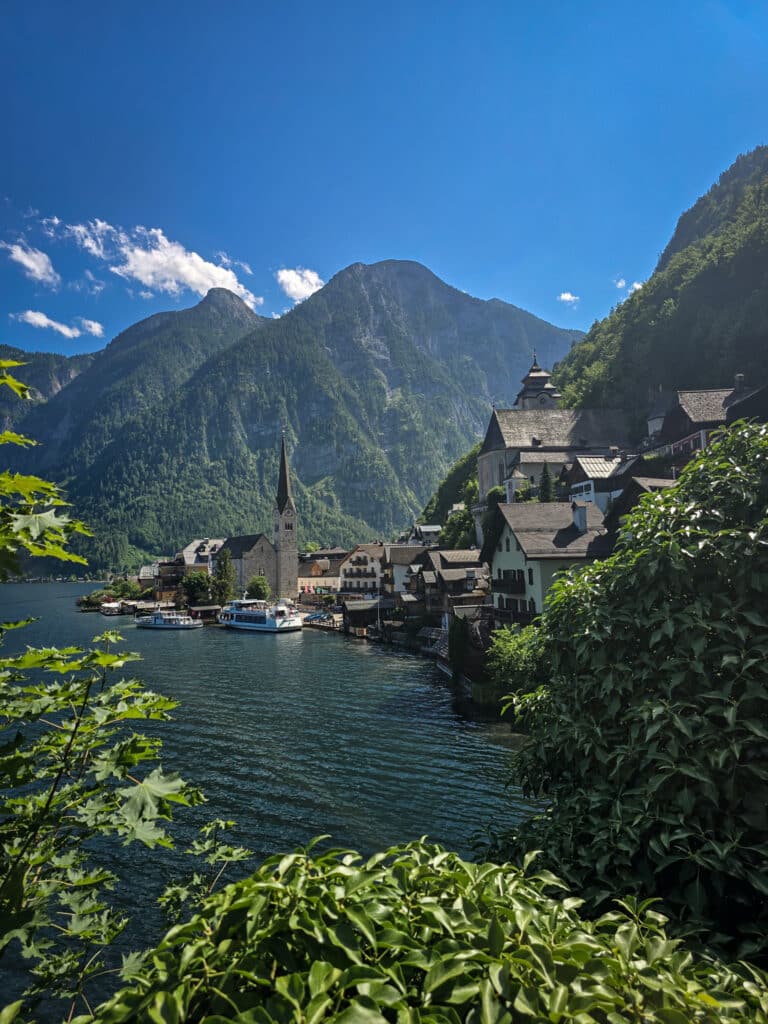
The decisive catalyst was social media. The iconic image of the church by the lake, framed by colorful houses and dramatic mountain scenery, became one of the most widely shared Alpine motifs in the world.
On Instagram alone, the hashtag #hallstatt now appears in hundreds of thousands of , while TikTok videos rack up millions of views. Each image tells the same story — of a place so beautiful it hardly seems real.
But the magic didn’t remain digital. Especially in Asia , Hallstatt turned into a place of longing. Travelers from China, South Korea, and Japan made the village a fixed stop on European itineraries. In 2012, Hallstatt was even recreated one-to-one in China—complete with market square, church, and lakeside promenade.
The news spread worldwide and cemented the fame of the original.
The so-called “Frozen effect” added another layer. Although Disney never officially confirmed that Hallstatt inspired Arendelle in Frozen, the rumor went viral—and permanently reshaped how the village was perceived. Families, influencers, and film fans suddenly wanted to see the “real-life Frozen village.”
At the same time, organized day tourism boomed. From Salzburg, Vienna, or Munich, Hallstatt is just a few hours away—perfect for guided bus tours designed to squeeze in as many photo stops as possible. Hallstatt became a must-see on fast-paced European routes, and its narrow lanes turned into bottlenecks for thousands of visitors each day.
What was once a hidden gem became a global stage.
Hallstatt didn’t seek fame—fame found it. And that is precisely what makes the village a symbol of our time: a place that shows how a single image can change the fate of an entire region.
What Overtourism Is Doing to Hallstatt
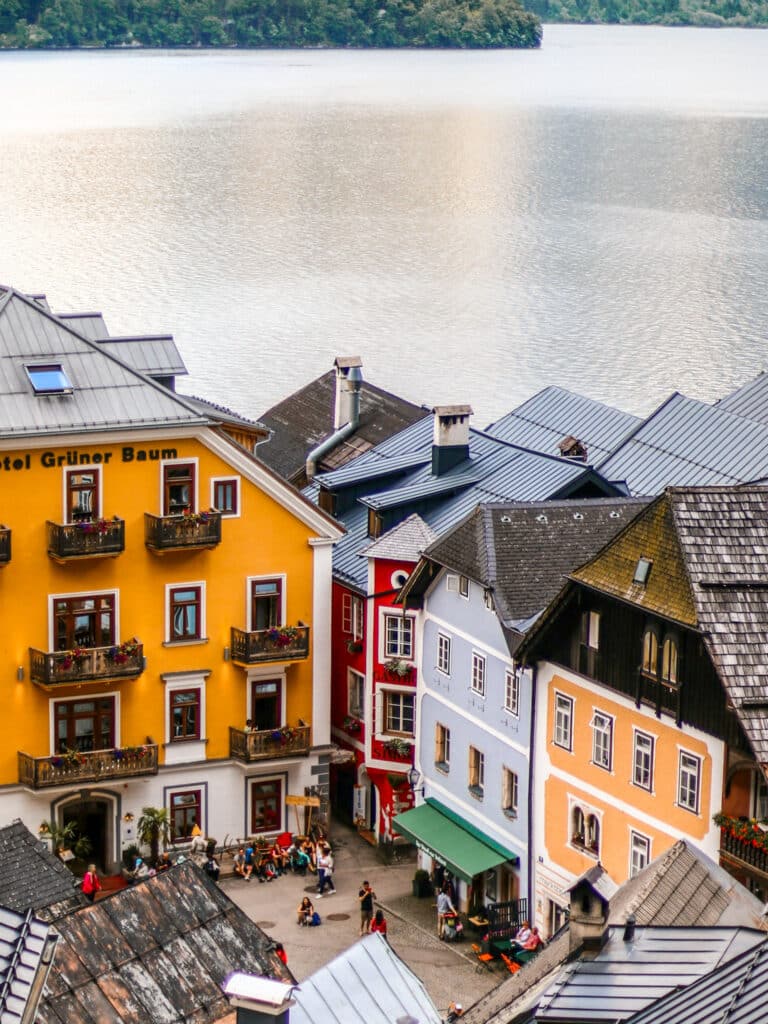
Global fame has brought Hallstatt not only admiration, but also strain. What feels like an idyllic fairytale to visitors has long become a permanent state of exception for many locals. Caught between constant crowds, rising costs, and a fading sense of community, the village faces the challenge of preserving its balance.
Daily life between calm and overload
In the early morning, Hallstatt lies quietly by the lake. Only a few locals are out, the lanes are empty, the water perfectly still. But around nine o’clock, the scene shifts: buses arrive,
For residents, this means everyday restrictions. A simple trip to the shops or to work takes twice as long; spontaneous errands become a test of patience. Many locals speak of two Hallstatts—the “quiet Hallstatt” of the morning and the “foreign Hallstatt” of the day.
More and more businesses now cater primarily to visitors, not residents. Homes that once belonged to families have become holiday apartments or second residences.
Rising prices, shrinking living space
Tourism has brought prosperity—but also its shadows. Rents, property prices, and everyday goods have risen sharply, while available housing continues to shrink. Those who grow up here often struggle to find affordable places to live. Younger generations move away; older ones remain. The village is visibly aging.
For many families, the question is whether to stay or leave. Hallstatt depends economically on tourism, yet socially it risks hollowing out. Once shaped by mining, the village now relies almost entirely on visitor flows — a dependency that becomes especially clear in times of crisis.
Nature and infrastructure under pressure
Between lake and rock face, there is little room to grow. Even small changes have noticeable effects. Parking areas are regularly full, buses clog access roads, and the narrow streets have reached their limits. Constant foot traffic brings more noise and waste, particularly during the summer months.
Nature bears the burden as well. The fragile lakeshore is heavily used, paths require frequent maintenance, and sensitive areas face ongoing strain. At the same time, the municipality is trying to respond—with stricter regulations, environmental measures, and visitor management initiatives.
Hallstatt has become emblematic of a central question in modern travel: how can a place preserve its beauty when that very beauty is its greatest burden?
The answer will determine whether Hallstatt remains a living village in the future—or becomes a place that exists only in images.
What Hallstatt Is Doing to Tackle Overtourism
Hallstatt has long understood that global fame brings not only pride, but responsibility. To cope with rising visitor numbers, the village has spent recent years developing strategies that actively manage tourism instead of simply letting it happen.
The goal is clear: less strain, more quality of life—for visitors and locals alike.
Visitor management and bus limits
One of the most visible changes affects organized day traffic. Coaches are now allowed to enter Hallstatt only in limited numbers and within fixed time slots. Tour operators must register arrival times in advance, helping spread visitor flows more evenly throughout the day.
Parking and access zones are also digitally monitored. Sensors and reservation systems indicate when car parks are full and how many buses may be in the village at the same time. This prevents congestion on the narrow access roads.
These measures may seem strict, but their impact is tangible: visitor numbers remain high, yet are better distributed—and Hallstatt gains room to breathe.
Quality over quantity
Rather than chasing volume, Hallstatt is increasingly focusing on value-driven, sustainable tourism. The aim is to attract fewer—but more mindful—visitors: travelers who stay longer, support local businesses, and respect the village’s culture.
This is reflected in experiences with strong local roots – such as visits to the Salt Mine, hikes in the Dachstein region, or small boat trips on the lake. These offer genuine encounters while easing pressure on the village center.
At the same time, information campaignsraise awareness of the site’s UNESCO status: no drones, no littering by the lake, no access to private areas. The message is friendly but firm—Hallstatt does not want to be a museum, but a living place that deserves respect.
Cooperation and responsibility
As part of the Hallstatt–Dachstein / Salzkammergut Cultural Landscape, the village is protected by UNESCO. Together with the state of Upper Austria and regional partners, Hallstatt is developing long-term plans for sustainable mobility, visitor management, and environmental protection.
The approach is clear: tourism is not meant to be stopped, but shaped in a way that benefits everyone—the residents, the landscape, and the guests who come seeking the “real” Hallstatt.
Hallstatt shows that tourism is not only something to be counted, but something that can be guided. With clear rules, modern technology, and a growing awareness of sustainability, the village is working to restore its balance—between global stage and small living space.
Perhaps this points to the true future of travel: more conscious, more respectful, and more honest.
Conclusion: Hallstatt Between Longing and Responsibility
Hallstatt is no longer just a travel destination—it has become a symbol of the longing for beauty, authenticity, and quiet moments by the lake. But that longing comes at a cost. Millions of visitors each year are reshaping a village once defined by stillness, craftsmanship, and thousands of years of history.
Today, Hallstatt stands at a turning point. Between narrow lanes and global attention, the village is striving to maintain balance—between openness and protection, between quality of life and tourism-driven prosperity.
And this is precisely where its strength lies: Hallstatt is learning to continue its own story with care, awareness, and clear boundaries.
Anyone who visits soon senses that there is more here than postcard perfection. Hallstatt is a place meant to be lived, not just photographed. A village that welcomes visitors—but also expects them to arrive with respect.
💡 Our tip: Plan your visit thoughtfully. Come early in the morning or stay into the evening, avoid peak hours, and take time for quiet paths and genuine encounters. Hallstatt will reward you with stillness, authenticity, and a feeling no photograph can ever fully capture.