

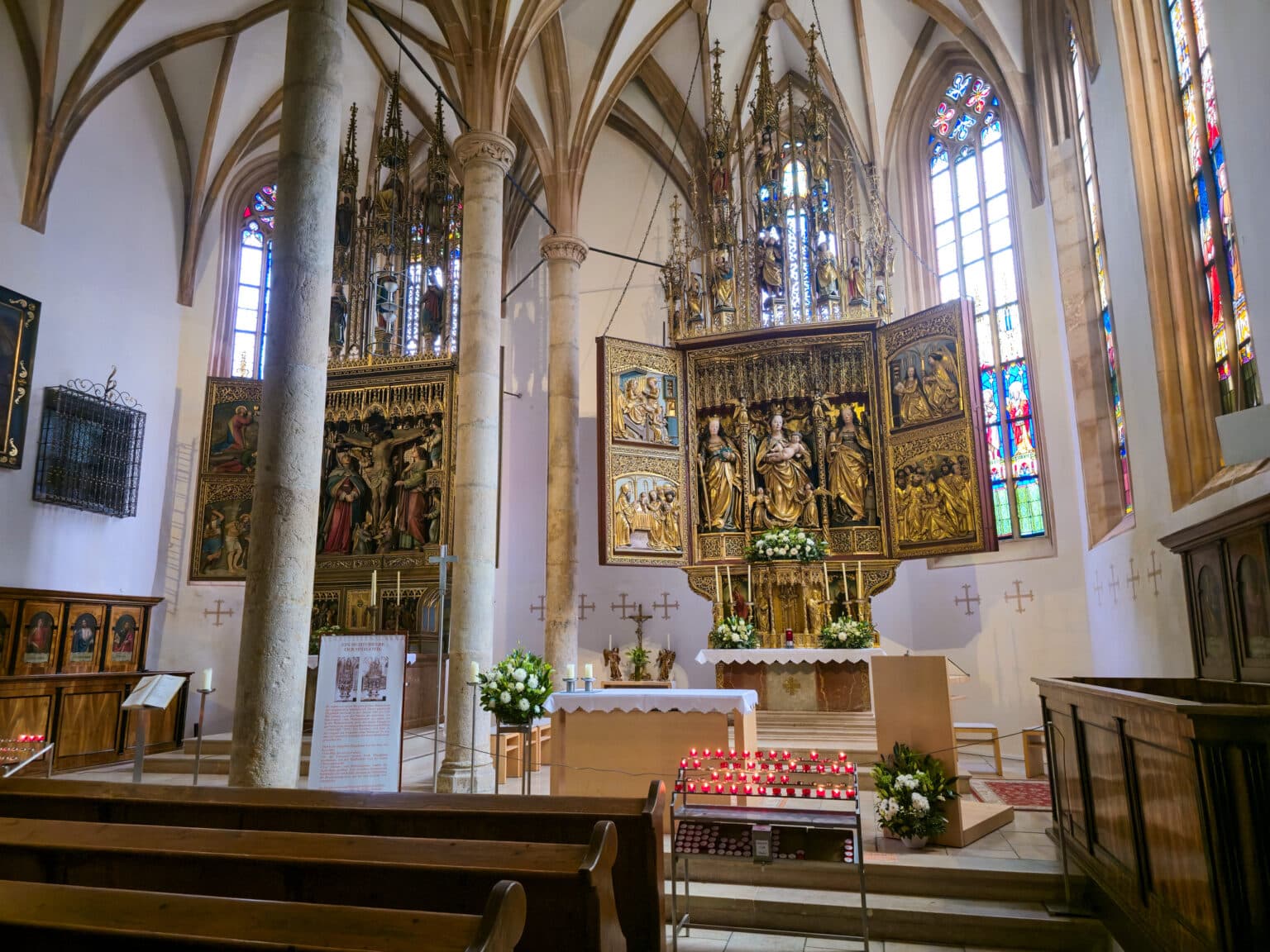
A Silent Landmark Above the Lake
High above the rooftops of Hallstatt rises the Catholic Parish Church of the Assumption — a quiet landmark of the village and one of the most beautiful churches in the entire Salzkammergut.
Nestled between the rock face and the lake, it seems to float above the town — calm, timeless, and radiating a presence that reaches far beyond its walls.
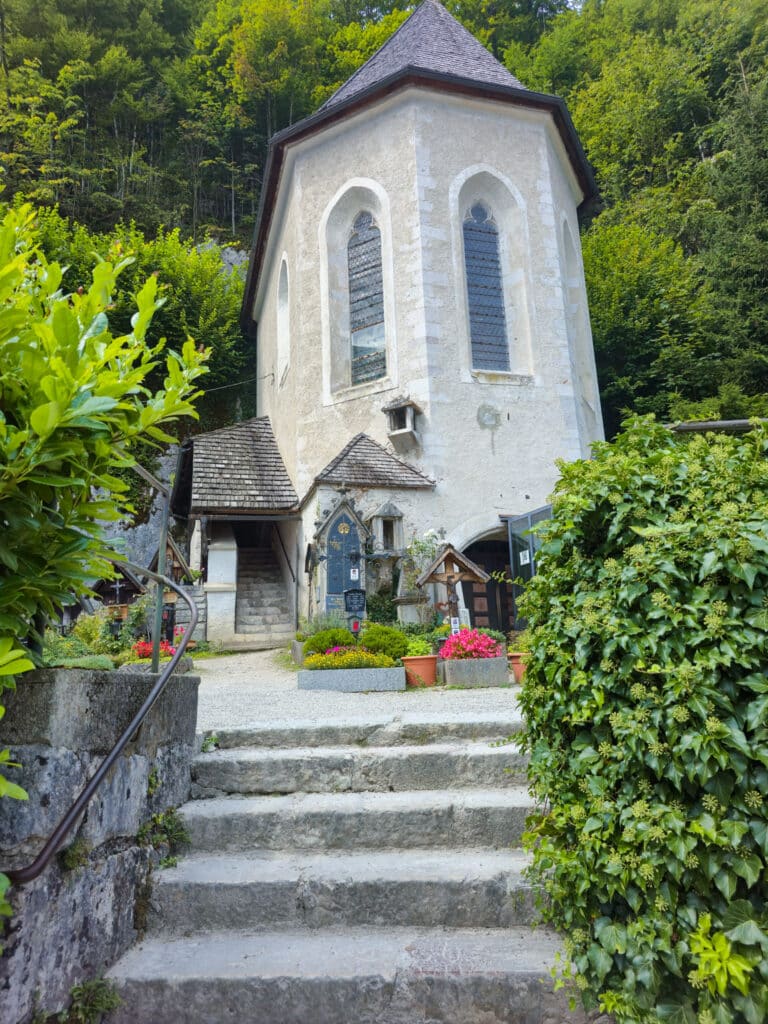
Even the short walk up to the church changes the atmosphere. The sounds of the marketplace fade, the view opens toward the water, and suddenly you stand before a structure that has watched over Hallstatt for centuries.
Here, history meets silence — and art meets faith.
The late-Gothic church with its Romanesque tower speaks of a time when faith shaped everyday life and craftsmanship became art.
Its altars, frescoes, and delicate details reflect deep devotion and centuries of tradition.
No other place in Hallstatt combines history, architecture, and scenery so harmoniously — a site where you can truly feel the spirit of this ancient mountain village.
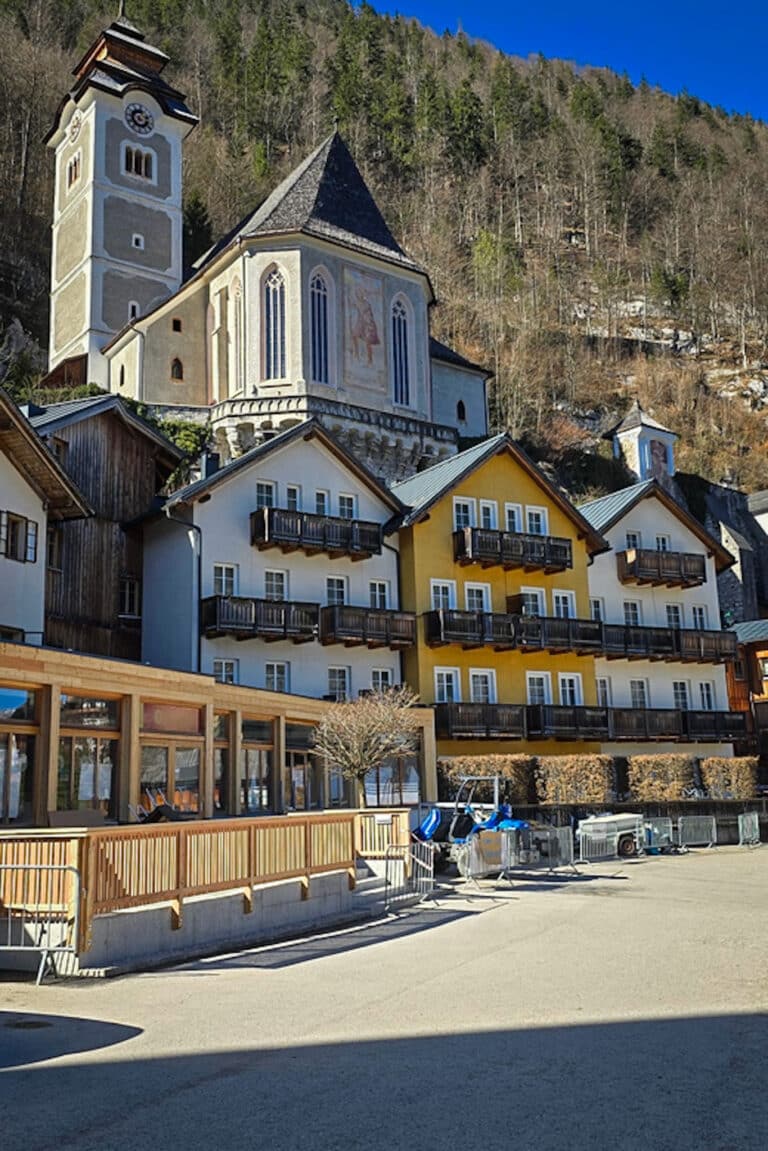
History & Architecture – From Romanesque to Gothic
The history of the Parish Church of the Assumption in Hallstatt stretches back nearly nine centuries. Around the year 1180, a small Romanesque church already stood on this site — simple, built of light stone, with a solid tower that remains the oldest part of the structure today.
As the region’s prosperity grew, Hallstatt developed into an important center of the salt trade during the late Middle Ages.
Around 1505, construction began to replace the old church with a new building in the late Gothic style. Tall pointed arches, intricate tracery, and a bright, spacious nave gave the church the elegance that still defines it today.
Particularly striking is the contrast between the plain Romanesque tower — which received a Baroque dome after a fire in the 18th century — and the graceful Gothic nave.
This blend of two eras gives the parish church its unmistakable character: ancient and dignified, yet vibrant and harmoniously integrated into the surrounding landscape.
Inside, the craftsmanship of the period is revealed in full. The famous Miners’ Altar, donated around 1500 by Hallstatt’s salt miners, depicts in finely carved scenes the life of Mary and Saint Bartholomew — the patron saint of miners.
The delicate ribbed vaulting and neo-Gothic altars from the 19th century also bear witness to the deep connection between faith and craftsmanship.
During a major restoration in 2002, colors, wood carvings, and stone details were carefully uncovered. Today, the church once again radiates the quiet beauty that has defined it for centuries — a symbol of endurance, faith, and the art of balance.
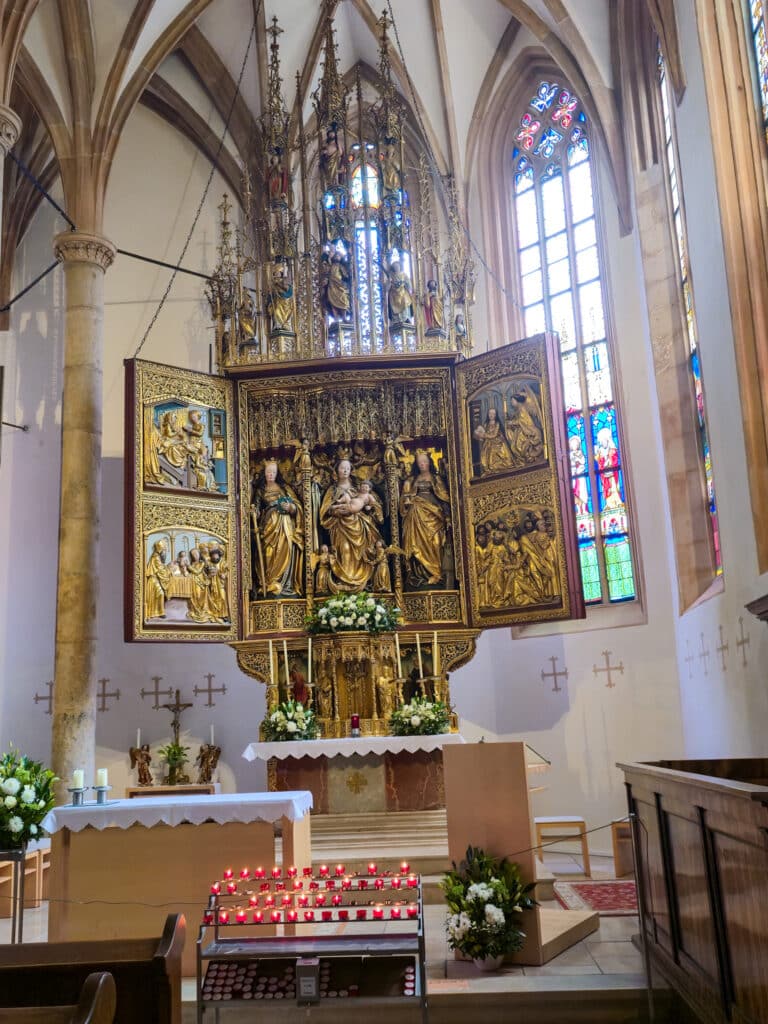
Art & Altars – Expressions of Faith and Craftsmanship
Anyone entering the Parish Church of the Assumption in Hallstatt immediately senses that this place is more than just a building. Here, art, craftsmanship, and faith come together — in a silence that feels not empty, but full of presence.
At the heart of the church stands the Miners’ Altar, one of the most important artworks in the Salzkammergut. Donated around 1500 by Hallstatt’s salt miners, it tells through finely carved wooden figures the story of Mary and Saint Bartholomew, the patron saint of miners.
Every fold, every gesture is meticulously carved — a masterpiece that reflects not only technical skill but also deep devotion.
Beside it stands the Marian Altar, a late-Gothic winged altar from the mid-15th century. Its painted panels depict angels, saints, and the Madonna with Child in radiant colors. Despite its age, it feels alive — as if time itself had paused within its images.
A 19th-century neo-Gothic frame surrounds the ensemble, uniting historical authenticity with quiet elegance.
Around the altars are numerous other works of art: delicate wooden figures, crucifix depictions, and statues created between the Gothic and Baroque periods. Together, they form a silent testimony to Hallstatt’s artistic and spiritual heritage — shaped by miners, craftsmen, and believers who expressed their faith through form and color.
During the major restoration in 2002, the altars, frescoes, and wooden structures were carefully uncovered and preserved.
Today, the church once again shines with the simple splendor that has defined it for centuries — a living place of faith, where art is not ornament but an expression of soul and time.
A Place of Stillness – Why a Visit Is Worth It
The Catholic Parish Church of the Assumption is not a place you simply enter — it is a place you feel. Inside, a deep sense of calm unfolds — not an empty silence, but one filled with comfort. Among ancient stones, the scent of wood and wax, and the gentle light filtering through stained-glass windows, time itself seems to slow down.
Those who linger here can sense something of Hallstatt’s soul — that harmony between faith, craftsmanship, and nature that has shaped the village for centuries.
From the churchyard, the view opens over Lake Hallstatt, and for a moment, it becomes clear why this place moves so many: it unites beauty and transience, silence and eternity.
A visit is worthwhile in every season — in spring, when soft light touches the lake, and in autumn, when mist drifts over the rooftops.
The Church of the Assumption is not a monument, but a living place of faith — one that calms the spirit and touches the heart.
Travel Tip
Experience Hallstatt not just as a postcard image, but as a place filled with history, soul, and quiet beauty.
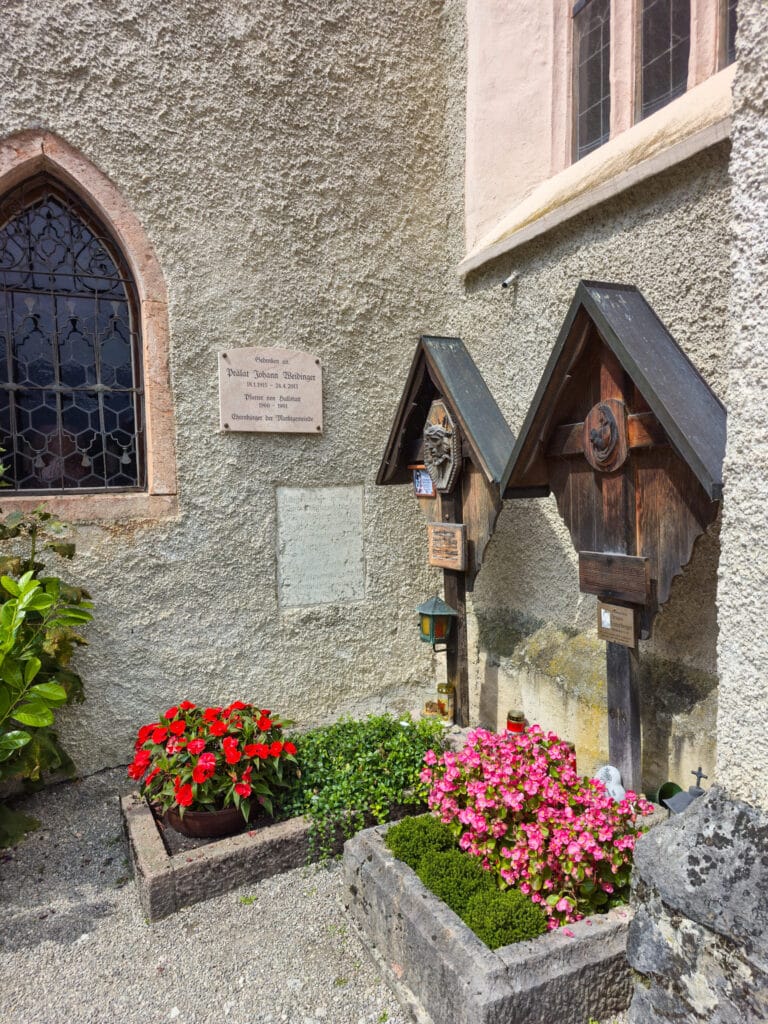
On our private day tours from Salzburg, you’ll discover Hallstatt in a truly personal way — with time to pause, reflect, and take it all in. From the parish church and the cemetery to the charnel house, we’ll guide you to the village’s most beautiful and peaceful spots.
Explore our private Hallstatt tours from Salzburg and experience the village beyond the postcards.