The Staging of a Landscape: Why Lake Wolfgangsee Remains Timeless
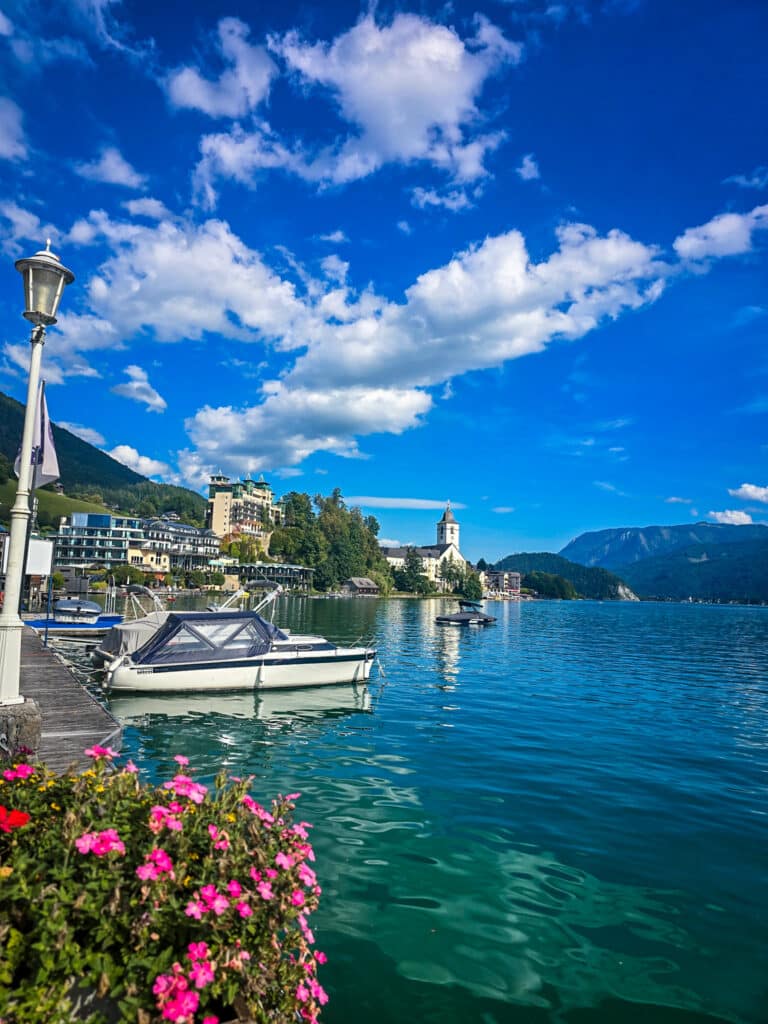
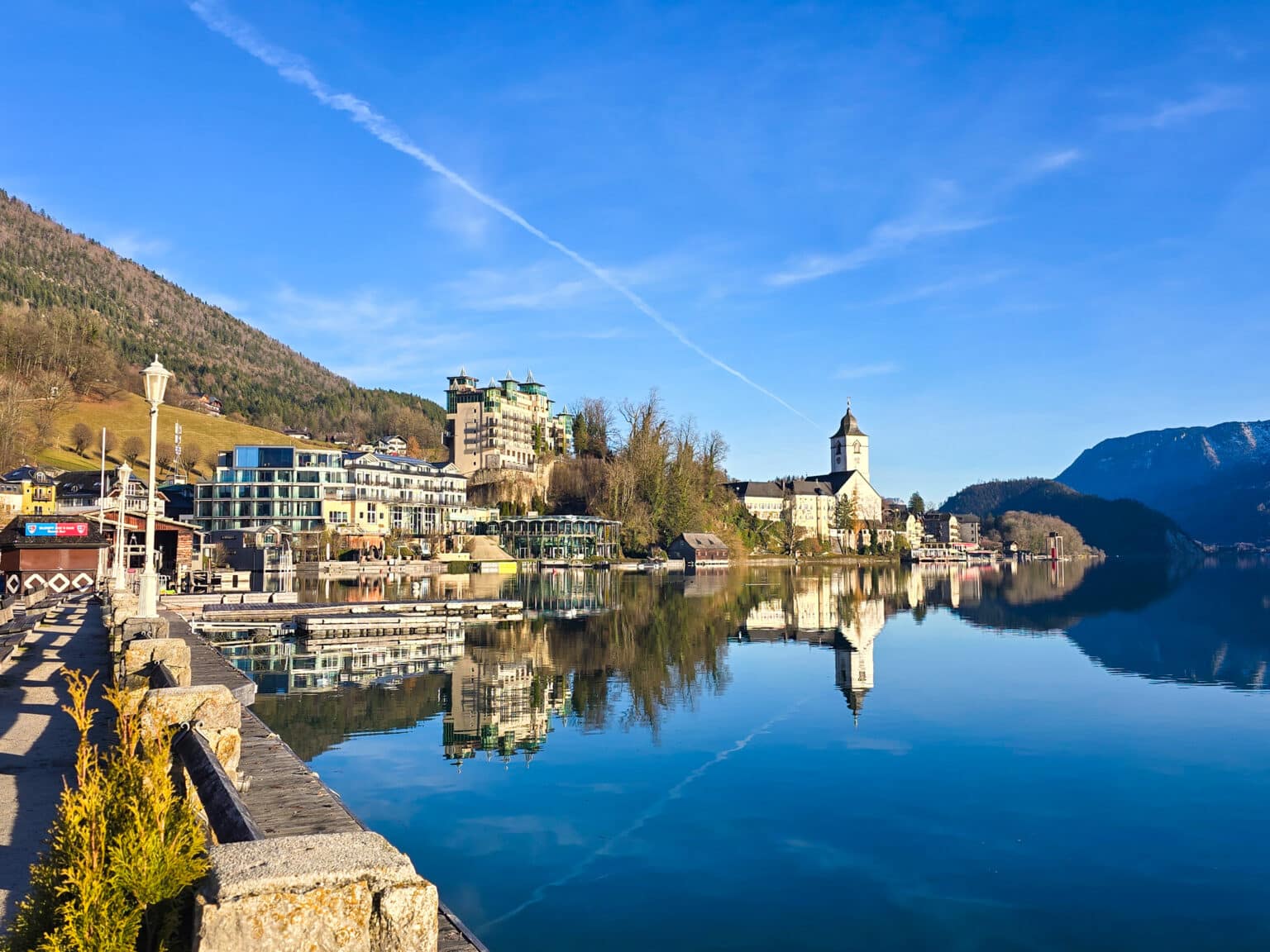
Lake Wolfgangsee is no mere natural phenomenon; it is a cultural masterpiece—a Gesamtkunstwerk. Situated at 538 meters above sea level and framed by the rugged limestone faces of the Schafberg and the gentle ridges of the Osterhorn group, it serves as the aesthetic powerhouse of the Salzkammergut.
While other alpine waters often impress solely through their topography, Wolfgangsee defines itself through a centuries-old symbiosis of sacred significance, imperial nobility, and architectural consistency.
The fascination of this lake lies in its profound layers.
It is a place where medieval pilgrimage traditions transitioned seamlessly into the era of the “Sommerfrische”—that late 19th-century epoch of the “summer retreat” that transformed the lake into a premier meeting point for the European elite.
This historical density is palpable in every corner today: in the grand villas lining the shore, in the technical pioneering achievement of the steam cog railway, and in the deep blue depths of the water, which radiates an almost meditative tranquility.
To truly understand Lake Wolfgangsee, one must look beyond the obvious. True quality reveals itself in the balance between the three anchor points: St. Gilgen, St. Wolfgang, and Strobl. Despite their geographic proximity, each village represents its own distinct chapter of alpine cultural history.
This guide is a profound analysis of these worlds—designed for travelers seeking perfection in detail and aiming to penetrate a region in its full historical and aesthetic complexity.
The Magic Triangle: The Architecture of the Three Lakeside Centers
The identity of Lake Wolfgangsee is defined by a striking triangle. Although these centers are separated by only a few kilometers of water, they have developed completely independent characters over the centuries. This differentiation is the key to the lake’s remarkable diversity.
St. Gilgen: A Sanctuary of Baroque Elegance and Bourgeois Heritage
St. Gilgen serves not only geographically but, above all, aesthetically as the representative gateway to Lake Wolfgangsee. Approaching the village from the west, one immediately recognizes a structural harmony that distinguishes St. Gilgen significantly from the purely rustic architecture of many other alpine villages.
It is a place that exudes an almost aristocratic aura, inextricably linked to its history as a preferred residence for the Salzburg nobility and the Viennese upper class.
This historical depth is particularly palpable through the legacy of the Mozart family: while Wolfgang Amadeus Mozart himself never visited the village, St. Gilgen was the center of life for his mother, Anna Maria, and his sister, “Nannerl.” This connection lends the village an intellectual note to this day, reflected in the meticulously maintained facades of the town center and a general appreciation for cultural continuity.
Architecturally, St. Gilgen is a living textbook of the early “Sommerfrische” (summer retreat). Alongside the Baroque core, defined by the stately Mozarthaus and the Late Baroque parish church, the landscape is primarily shaped by outstanding examples of late 19th-century villa architecture.
These magnificent buildings, often constructed in the eclectic styles of the Neo-Renaissance or Historism, masterfully integrate into the alpine landscape with their extensive gardens and elaborate timber constructions. Here, a form of luxury was established that does not appear ostentatious but impresses through understatement and craftsmanship—a style considered today the epitome of Salzkammergut aesthetics.
What makes St. Gilgen so unique for the discerning visitor is this specific symbiosis of village intimacy and a cosmopolitan outlook. One can feel that the village has been a retreat for thinkers, artists, and statesmen for generations.
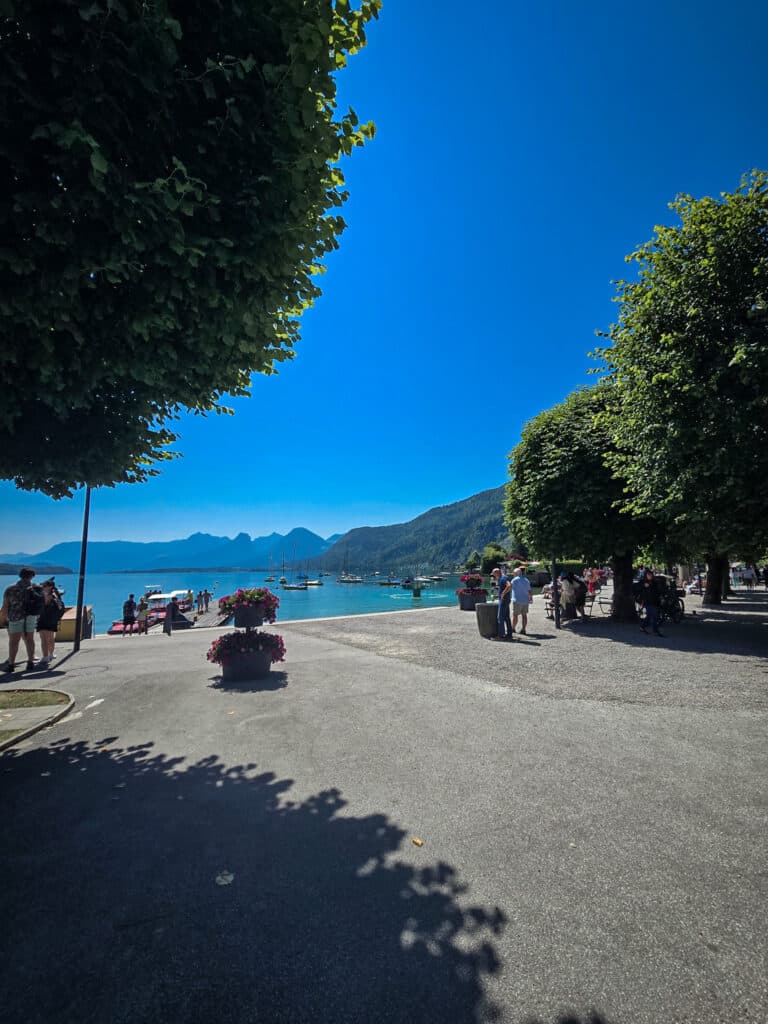
It is this tranquility away from the major tourist flows, paired with the view across the deep blue basin of the lake towards St. Wolfgang, that makes the village a place of true inspiration. St. Gilgen is not a museum, but a living jewel that defines its exclusivity through the preservation of fine details and an almost meditative atmosphere by the water.
Our Insider Tip: Stroll along the lakeside promenade towards Brunnwinkel. Here, time seems to have stood still: historic wooden boathouses and the complete absence of through traffic allow the lifestyle of the Fin de Siècle to become tangible.
St. Wolfgang: The Historical and Spiritual Gravitational Center
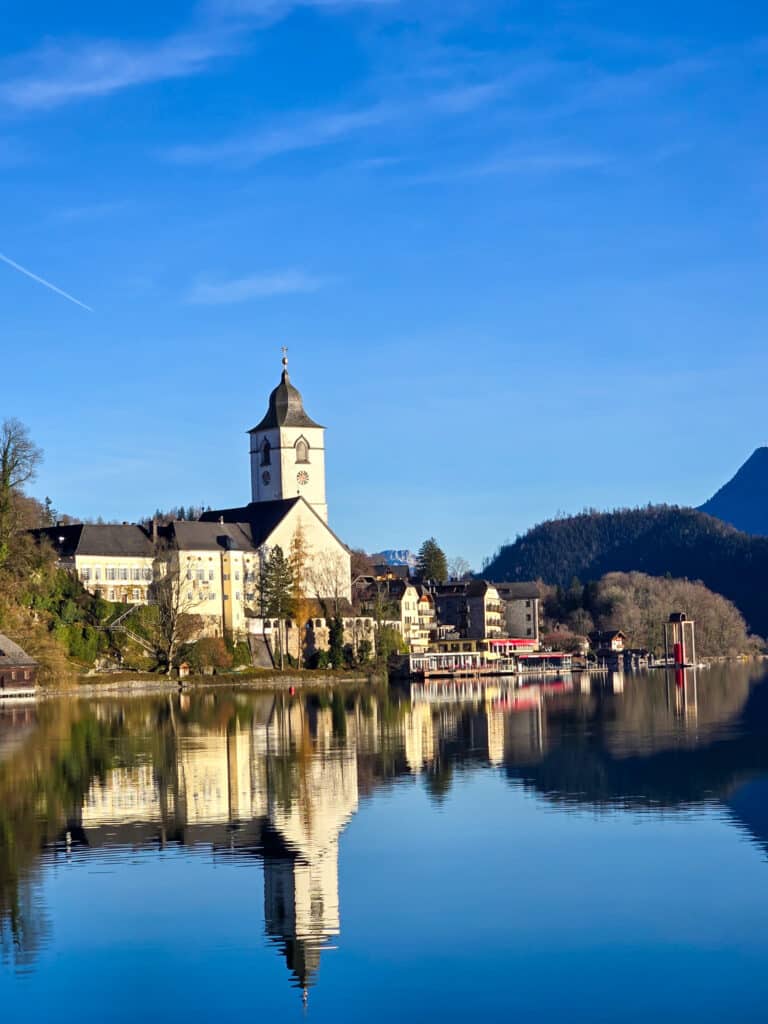
Following the northern shore of the lake, one reaches St. Wolfgang, the most storied location in the entire region. The village is a cultural phenomenon: it owes its global renown to a medieval legend of Saint Wolfgang and the resulting pilgrimage, which transformed it into one of Europe’s most significant spiritual centers during the 15th century.
This historical weight is still palpable in every alleyway today; the urban density and the exceptional quality of the architectural fabric—squeezed into the narrow space between steep mountain slopes and deep water—are rare within the Alpine region. The narrow, cobblestone paths still trace the ancient pilgrim trails, lending the market town an energy that far transcends that of an ordinary tourist destination.
The architectural and sacred jewel of the village is undoubtedly the prominent pilgrimage church. Inside, it houses the world-famous winged altar by Michael Pacher—a masterpiece of the Late Gothic period that captivates through its sculptural depth and the masterful symbiosis of wood carving and painting.
For art historians and aesthetes alike, this altar is a landmark that has cemented St. Wolfgang’s cultural relevance for centuries.
Yet, the village has masterfully managed to blend this venerable history with a modern lightness. At the latest with the “White Horse Inn” (Weißes Rössl), which became the epitome of Austrian hospitality through operetta and film, St. Wolfgang attained a second, secular fame that continues to attract guests from across the globe.
What truly distinguishes St. Wolfgang, however, is the preservation of its authenticity despite global interest. Those who look beyond the main thoroughfares will discover magnificent facades adorned with elaborate Lüftlmalerei (traditional fresco paintings)—visual narratives of faith, craftsmanship, and the arduous lives of the lakeside residents in times past.
The buildings here seem to grow directly out of the rock or brace themselves against the waves on massive stone foundations, lending the town an almost fortress-like, defiant aesthetic. The market acts as a living archive of the Salzkammergut, where traditional craftsmanship and contemporary gastronomy coexist at the highest level.
For the visitor, St. Wolfgang is the pulsating heart of the lake—a place of contrasts where the silence of the nave meets the vibrant bustle of the market square.
💡 Our Insider Tip: Walk a little further through the tunnel at the end of the village toward Ried. There, you will find quiet spots directly by the water to photograph the pilgrimage church away from the crowds, capturing it from a completely new, maritime perspective.
Strobl: An Aesthetic Return to Naturalness and Light
At the eastern end of the lake lies Strobl, a village that, in direct comparison to its neighbors, captivates with an almost puristic serenity and an entirely different spatial dimension. While St. Gilgen shines through Baroque nobility and St. Wolfgang through its sacred power, Strobl defines itself through vastness, ecological balance, and the specific light of the Salzkammergut.
Geographically, the village benefits from a flat shoreline topography, which—in contrast to the often shaded steep shores of the north—grants it the longest duration of sunlight on the entire lake.
This lends Strobl, particularly in the late afternoon hours, a soft, golden atmosphere that has fascinated artists and seekers of tranquility since the turn of the century.
The architecture in Strobl is less crowded and follows the ideal of the classic “Sommerfrische” with a sense of open space. Generous villas in the Swiss style, characterized by filigree wooden ornamentation and expansive gardens, dominate the townscape. They bear witness to an era when Strobl served as a discreet refuge for the bourgeoisie—those who shunned public staging but sought uncompromising quality.
Today, the municipality functions as the “ecological lung” of Lake Wolfgangsee.
The adjacent Blinklingmoos, a precious nature reserve, preserves the region’s original flora and fauna, forming a soothing contrast to the tourist development of the other lakeside centers.
What makes Strobl so valuable for the discerning visitor is the balance between cultivated hospitality and untouched natural space. Here, one finds no monumental church fortresses, but rather a harmonious embedding of the settlement into the landscape. The flat natural beaches and the lakeside promenade invite a deceleration that feels almost luxurious in its simplicity.
It is the place on the lake where the element of water serves not only as a backdrop but becomes immediately experiential through the wide shore zones. Strobl is the destination for the “second look”—quieter than its neighbors, yet possessing a constant, natural elegance that reflects the essence of the Salzkammergut in its purest form.
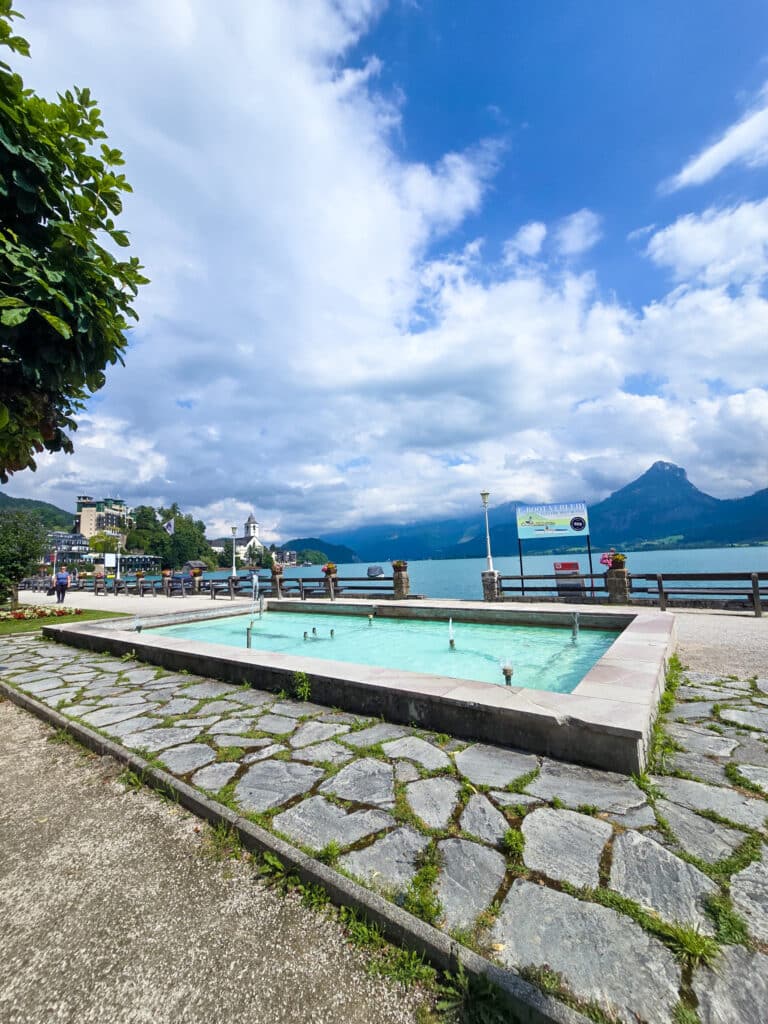
Our Insider Tip: Hike the path around the Bürglstein. A bold wooden walkway construction leads directly along the vertical rock face, only centimeters above the water level. It is the most intense place to experience the clarity of the lake and the raw power of the mountains simultaneously.
Summit Bliss and Engineering Prowess: The Schafbergbahn as a Technical Monument
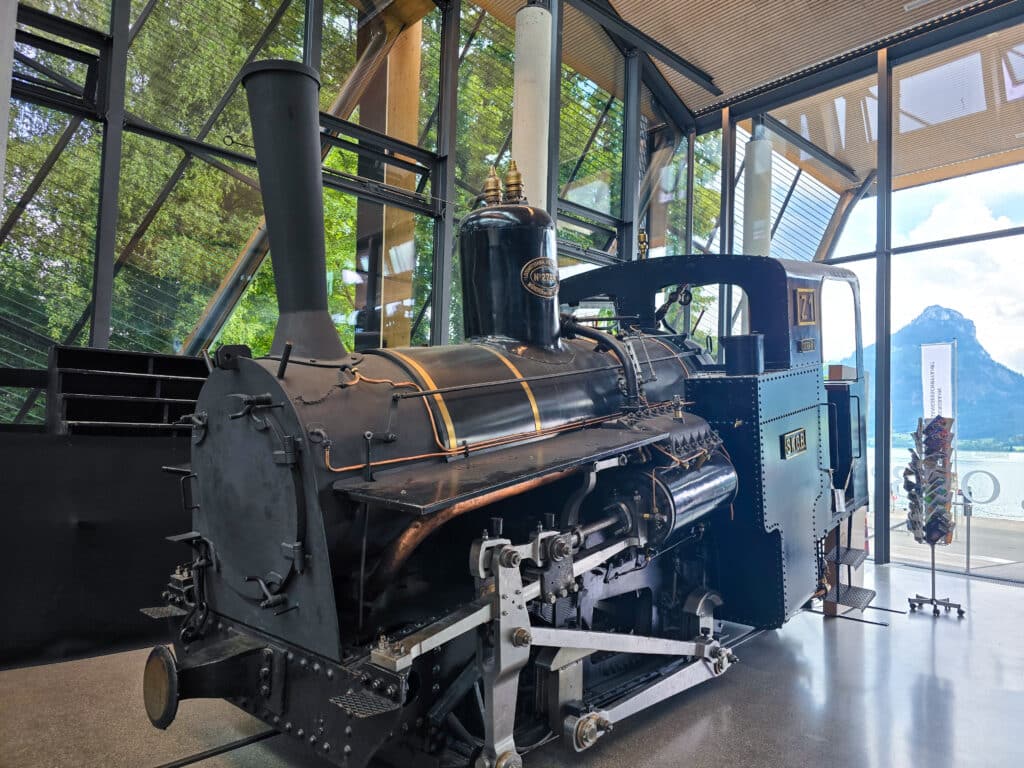
To grasp Lake Wolfgangsee in its entirety, one must embrace the vertical perspective. The Schafbergbahn is far more than a mere means of transport – it is a technical monument of the pioneering era. Since its opening in 1893, it has been considered the steepest steam cog railway in Austria, representing an epoch when humanity began to open the most extreme regions of the Alps to tourism without sacrificing the aesthetic integrity of the landscape.
Over a distance of 5.85 kilometers, the railway conquers a maximum gradient of 26 percent, ascending approximately 1,190 meters in altitude and connecting the maritime world of the lake with the alpine realm of the summit.
The journey to the peak of the Schafberg (1,783 m) resembles a journey back through industrial history. While modern railcars guarantee efficiency today, it is primarily the faithful nostalgia trains – powered by hissing steam locomotives from the Imperial era – that keep the historical heritage alive.
The rhythm of the machine, as it fights its way meter by meter up the rock, offers a glimpse into the enormous physical and technical exertion required to build this track over 130 years ago.
The routing itself is an architectural masterpiece: bold curve radii and narrow breaches in the limestone rock repeatedly reveal views of the mountain’s steeply plunging flanks.
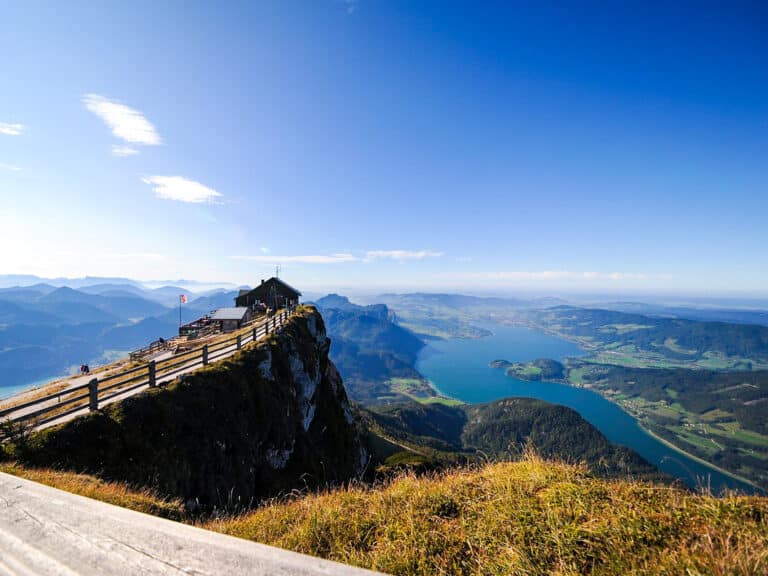
Upon reaching the top, a panorama unfolds that is often described as the “most beautiful in the Salzkammergut.” On a clear day, a 360-degree view encompasses not only 13 lakes of the region but extends from the eternal ice of the Dachstein Glacier far into the Bavarian Alpine foothills.
Particularly impressive is the north face of the Schafberg, which drops almost vertically toward Lake Mondsee, forming a dramatic contrast to the gentler alpine pastures on the southern side. The Schafberg is thus the ultimate vantage point for understanding the geological forces that shaped this region.
💡 Our insider tip: Take advantage of the online reservation for the first train of the day. When ascending, secure a seat on the left side of the train – this ensures you enjoy the most spectacular downward views of the lake during the journey.
The Zwölferhorn: Alpine Aesthetics in a Modern Interpretation
While the Schafbergbahn celebrates the nostalgia of the 19th century, the Zwölferhorn in St. Gilgen represents its contemporary counterpart. With the opening of the new cable car in 2020, an architectural statement was made at Lake Wolfgangsee, demonstrating how modern technology and sophisticated design can harmonize with the sensitive alpine landscape.
The clear, minimalist design language of the stations breaks away from traditional “Alpine kitsch,” opting instead for a silent, almost floating ascent in elegant red gondolas.
On the plateau of the Zwölferhorn (1,522 m), the focus is not on extreme athletic performance, but on the conscious experience of vastness. A barrier-free panoramic circular path makes the impressive views accessible to everyone, without the summit losing its character as a place of contemplation.
For the aesthete, the Zwölferhorn offers a visual clarity that reaches an almost mystical quality—especially during temperature inversions, when the lake lies beneath a thick blanket of fog and the surrounding peaks emerge like islands.
The combination of modern infrastructure and the untouched nature of the Osterhorn group makes the Zwölferhorn the ideal “observation balcony” for those who wish to view the lake from a bird’s-eye perspective without sacrificing comfort. It is the perfect complement to the historic Schafbergbahn and showcases the full spectrum of the alpine experience at Lake Wolfgangsee: from steam-powered nostalgia to the high-end architecture of the present day.
💡 Our Insider Tip: Visit the Zwölferhorn during the “Golden Hour” in the late afternoon. The light on the mountain restaurant’s terrace at this time is unsurpassed for photographers and connoisseurs alike.
Lake Wolfgangsee Shipping: Maritime Luxury and Nautical Heritage
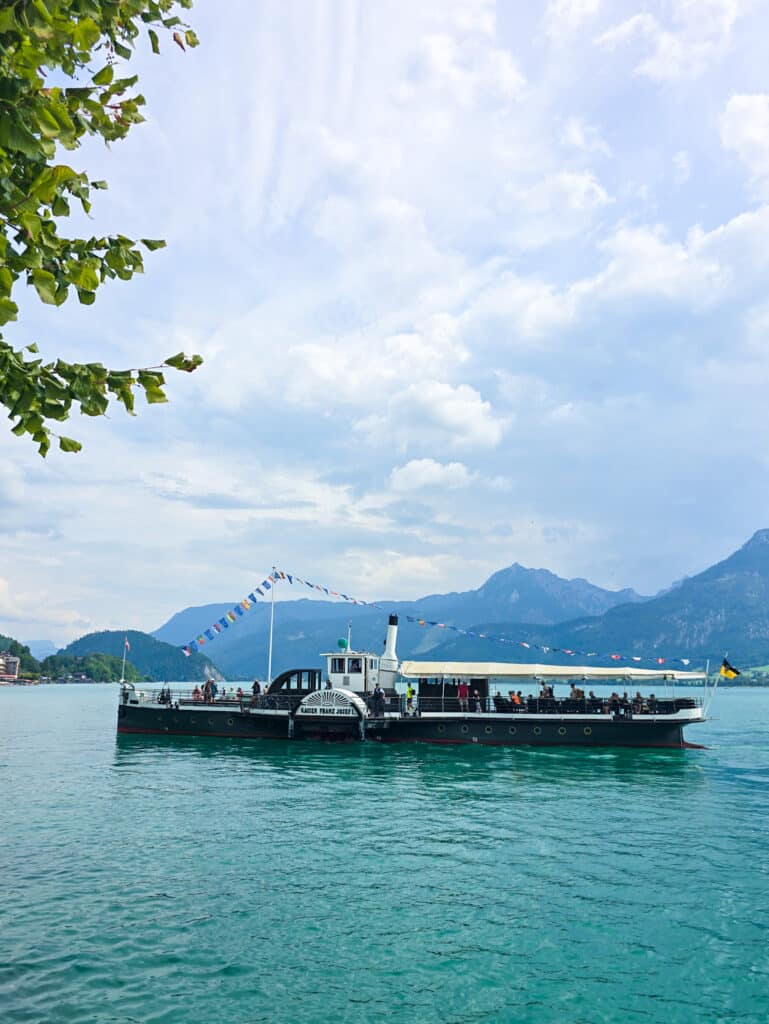
For centuries, the lake served as the region’s vital artery, long before pass roads connected the lakeside villages. Today, the Wolfgangsee ferry fleet preserves this heritage with a fleet that masterfully balances technical modernity and historical nostalgia. The undisputed flagship and soul of the lake is the paddle steamer “Kaiser Franz Josef I.”
As a floating monument of the Belle Époque, it recalls the glamorous beginnings of tourism in 1873. The gentle, rhythmic beat of the paddle wheels is more than just propulsion—it is the heartbeat of the lake, instantly transporting passengers into a decelerated era.
The perspective from the water reveals details that remain entirely hidden from land. Only from the deck of a ship can the dramatic topography of Lake Wolfgangsee be grasped in its full force. The passage along the Falkensteinwall is an experience of sublime beauty: here, the rock faces plunge hundreds of meters vertically into the depths, disappearing into the dark blue of the lake, which reaches its maximum depth at this point.
It is a moment in which the elemental power of the Alps, which once shaped this basin, becomes tangibly close.
For the modern traveler, the ferry service is also the most elegant link between St. Gilgen, St. Wolfgang, and Strobl. While roads often reach their capacity during peak season, the waterway offers an aesthetic and stress-free alternative.
Thus, shipping on Lake Wolfgangsee is not merely a means of transport but a floating observation deck that celebrates the maritime lightness of the Salzkammergut at the highest level.
💡 Our Insider Tip: Pay close attention to the schedule of the historic paddle steamer. A trip during twilight offers the most exclusive atmosphere, as the alpine panorama is reflected with perfect symmetry in the mirror-like water.
The Postalm: An Untouched High Plateau of Serenity
Only a short drive along the panoramic toll road from Strobl, a natural expanse of rare vastness unfolds: the Postalm. As the second-largest high plateau in Central Europe, it forms the perfect scenic counterpoint to the bustling activity along the lakeshore.
At an average altitude of 1,300 meters, an extensive alpine pasture area stretches out, captivating visitors with its rolling hills, centuries-old wooden huts, and a botanical diversity that is unparalleled in the Alpine region.
The Postalm is a place of reduction and visual clarity. Here, endless alpine meadows and unobstructed views of the glaciated Dachstein massif dominate the landscape. For hikers and nature photographers, the plateau offers countless motifs that capture the primal, raw beauty of the Salzkammergut—far removed from any tourist staging.
Especially in autumn, when the larches glow golden and the visibility is at its sharpest, the Postalm unfolds an almost meditative power. It is the luxury of sheer expanse that makes this location so precious to connoisseurs.
💡 Our Insider Tip: Visit the historic Postalm Chapel, which was once built for Emperor Franz Josef I. In the vast alpine pastures behind the main mountain inns, you will find absolute solitude even during the peak season.
Lakeside Culinary Excellence: A Symbiosis of Alpine Tradition and Fine Dining
The gastronomy of Lake Wolfgangsee is a reflection of its social history: deeply rooted in rural tradition, yet refined over decades by the sophisticated demands of the aristocratic “Sommerfrische.” The undisputed culinary leitmotif is Wolfgangsee fish.
In the crystal-clear, nutrient-poor depths, Arctic char and “Reinanke” (lake whitefish) thrive, possessing a texture and quality considered a benchmark in the Alpine region. Dining at one of the traditional establishments directly on the shore, one experiences a cuisine that places the product radically at the center—often refined only with alpine rock salt and local butter, so as not to overpower the delicate minerality of the water.
Yet, the culinary spectrum extends far beyond fish. In the hearts of St. Wolfgang and St. Gilgen, you will find “Toque-awarded” (Gault Millau) restaurants that deconstruct and reassemble Austrian classics, sitting alongside authentic taverns that preserve the artisanal perfection of Old Austrian pastry culture.
It is this coexistence of rustic alpine culture on the Postalm and urban fine dining at the water’s edge that makes the lake so alluring for gourmets. A glass of chilled Veltliner on one of the exclusive lakeside terraces is not merely a pastime; it is the culinary culmination of a meticulously staged landscape.
💡 Our Insider Tip: Seek out the small, family-owned “Schlossfischereien” (manorial fisheries). The smoked fish offered there, fresh from the beechwood smoke, represents the most honest and flavor-intense form of local cuisine.
Dynamics and Elemental Power: World-Class Active Sports
For those who do not wish to view the lake merely as a backdrop but seek to penetrate it physically, Lake Wolfgangsee offers an infrastructure that meets the highest athletic standards. Its unique appeal lies in the dramaturgy: every activity takes place against the vertical force of the Falkensteinwall or the Schafberg, lending the sport an almost monumental dimension.
Nautical Precision: Windsurfing, Sailing, and Waterskiing
Due to the specific thermal conditions—channeled through the surrounding mountain massifs, particularly in the basin of St. Gilgen—the lake is considered a demanding arena for windsurfers and sailors. When the “Brunnwind” reliably sets in during the morning hours, it provides conditions that both require and reward technical precision.
Conversely, those seeking absolute tranquility utilize the early morning hours for waterskiing or wakeboarding. When the boat breaks the mirror-like surface as the first sunlight touches the peaks, one experiences an exclusivity that must be physically earned.
Swimming: Immersing in Drinking-Water Quality
Swimming in Lake Wolfgangsee is a sensory experience. The water consistently maintains drinking-water quality and a transparency that allows for visibility of several meters.
Whether in the architecturally charming lidos with their historicizing flair or at the hidden natural shores along the Bürglstein circular path—immersing oneself in the emerald-green water is the most direct way to feel the purity of this protected landscape.
Paragliding: Conquering the Vertical
The ultimate perspective on the Salzkammergut, however, reveals itself from the air. The Zwölferhorn is among the most renowned launch sites for paragliders in the Eastern Alps. A tandem flight here offers far more than an adrenaline rush; it is a visual analysis of the topography.
Silently soaring over the deep blue abyss, one overlooks the complex lake landscape stretching toward the Dachstein, finally grasping the true geological dimension of this glacially formed basin from this height.
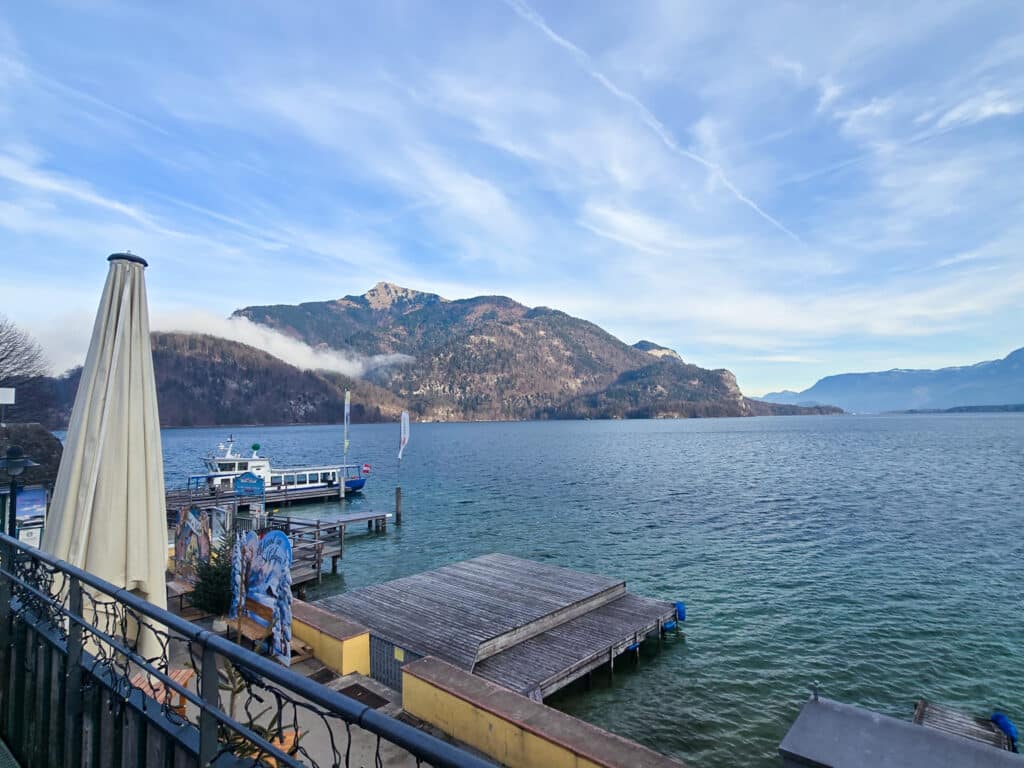
Our Insider Tip: Plan your nautical activities or tandem flights for the early morning hours. At this time, the air layers are most stable, and the water surface offers that glass-like consistency that is equally ideal for water sports enthusiasts and photographers.
Planning and Logistics: Strategies for a Seamless Experience
Due to its international prestige, a visit to Lake Wolfgangsee is a matter of strategic planning. By understanding the lake’s dynamics, seasonal traffic flows, and topographical nuances, one can bypass mass tourism and secure an experience of the highest exclusivity.
Arrival: Between Aesthetic Appeal and Efficiency
The classic route from Salzburg via the B158 (Wolfgangsee Bundesstraße) offers one of the most spectacular panoramic descents in the Alps as you approach St. Gilgen. Yet, as impressive as this view may be, this arterial road is highly sensitive to traffic volumes during the peak season.
For independent travelers with high standards of quality, we recommend St. Gilgen as your logistical anchor point. The village functions as a hub, allowing for a direct transition from the road to the water or into the vertical dimension of the Zwölferhorn cable car, without the need to penetrate deep into the traffic-sensitive zones of the northern shore.
Parking Management: Urban Challenges in an Alpine Setting
In the historically evolved centers of St. Wolfgang and St. Gilgen, parking space is a limited resource. While consistent traffic-calming measures protect the architectural aesthetics of the village cores, they demand logistical foresight from the visitor.
💡 Our Insider Tip: Leverage the strategic superiority of the ferry service. Park your vehicle in Strobl, where parking capacities are often significantly more relaxed, and use the crossing to St. Wolfgang as a conscious act of deceleration. Arriving at the center via the waterway is the only form of approach that truly does justice to the historical significance of St. Wolfgang.
The Seasonal Cycle: Cultural Continuity and Atmospheric Transformation
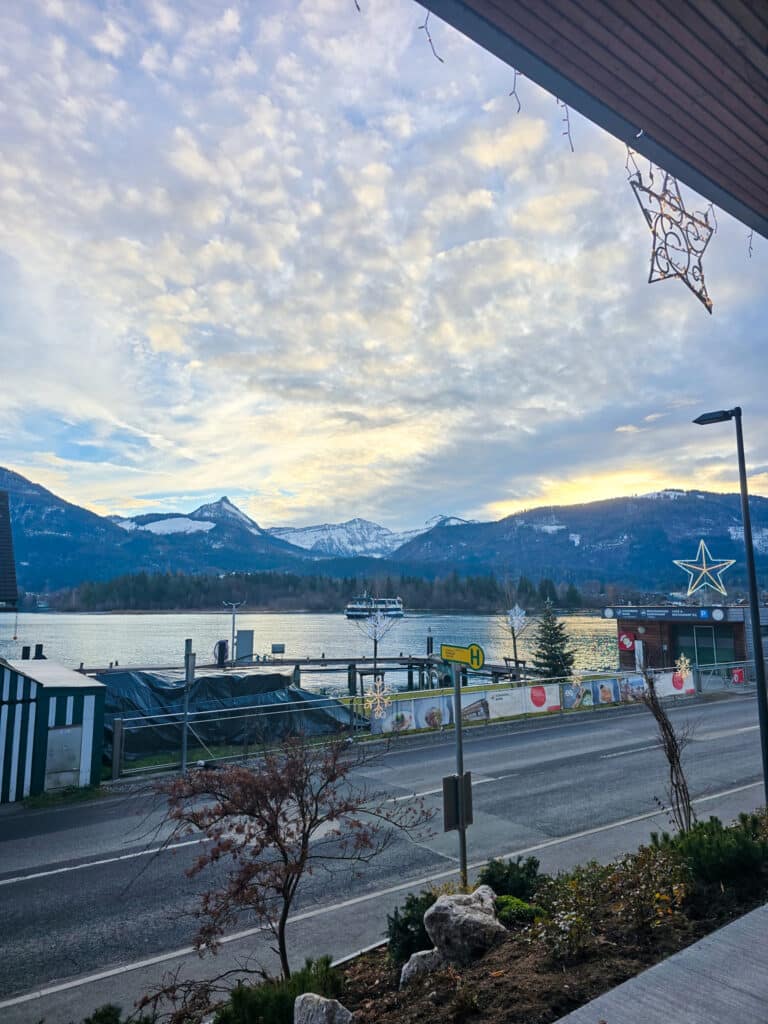
The quality of Lake Wolfgangsee is not defined by the summer months alone; its true substance reveals itself through the consistency of the seasonal cycle. Two phases in particular place the lake in the international spotlight, showcasing its capacity for atmospheric transformation far beyond the traditional bathing season.
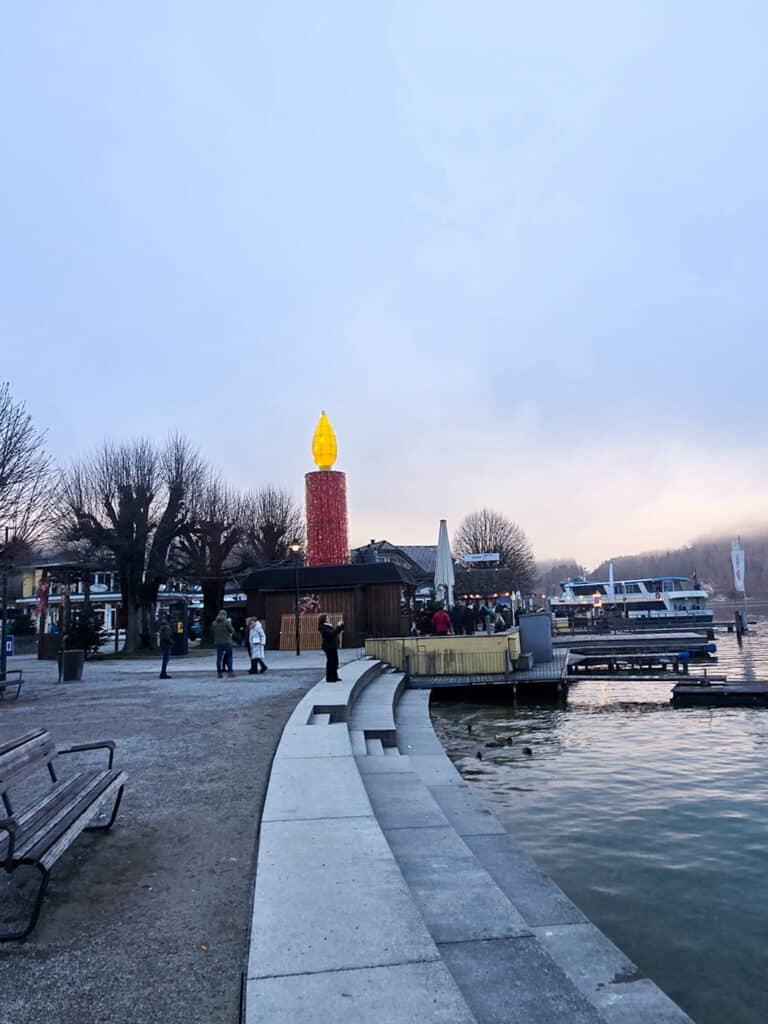
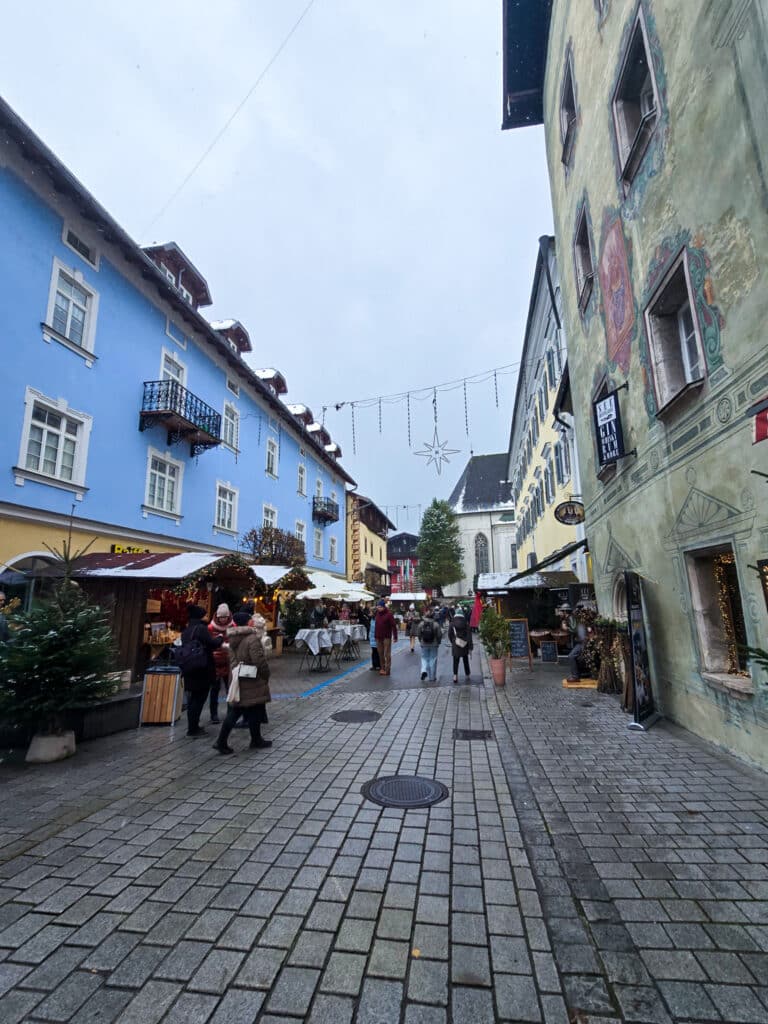
The Wolfgangseer Advent is today considered one of the most aesthetically profound Christmas markets in the entire Alpine region. When the monumental, floating “Peace Light” lantern glows on the dark waters before St. Wolfgang, the lake basin is transformed into an almost sacred backdrop.
It is the conscious rejection of loud, commercial kitsch in favor of authentic craftsmanship and a near-meditative silence that makes this period so precious to connoisseurs.
In autumnal contrast stands the Wolfgangseelauf, one of Europe’s most scenically imposing running events. The circumnavigation of the lake (27 km) challenges athletes particularly at the steep flank of the Falkensteinwall, demonstrating the region’s athletic vitality at a time when nature displays its most intense color palette.
During these months, the lake appears like a polished sapphire, framed by the burning colors of the mixed forests.
Our Insider Tip: Visit the lake during the “Indian Summer” (late September to October). The crystal-clear air of this phase enables panoramic views from the Schafberg extending far into the Bavarian Alpine foothills—views that are unsurpassed in their intensity.
The Myth of Falkenstein: The Spiritual Heart Between Worlds
One geographical element is essential for a holistic understanding of Lake Wolfgangsee: the Falkensteinwall. This massive rock formation, which plunges abruptly into the lake between St. Gilgen and St. Wolfgang, is far more than an imposing landmark.
It marks the historical boundary between former territories and houses the Falkenstein Church—an architectural curiosity built directly into the steep cliffside.
Accessible only on foot via the ancient pilgrimage path or from the water, this site breathes the history of medieval pilgrimage. Traversing the Falkenstein area offers those moments of absolute isolation that are often elusive in the bustling village centers.
The combination of vertical rock faces—descending up to 100 meters beneath the water’s surface—and hidden, silent coves makes the Falkenstein the mystical anchor point of the region.
Our Insider Tip: Hike the pilgrimage trail from St. Gilgen to St. Wolfgang. It is the most profound way to physically experience the topographical barrier and the elemental energy that has shaped this lake since the Middle Ages
Conclusion: Lake Wolfgangsee – A Timeless Masterpiece of the Alps
Lake Wolfgangsee eludes a fleeting, purely tourist perspective. It is a place that captivates through the depth of its history, the nobility of its architecture, and the immense power of its alpine nature.
From the Baroque traces in St. Gilgen and the sacred brilliance of the Pacher Altar to the archaic vastness of the Postalm, these waters offer a density of experiences that holds a unique position within the entire Alpine region.
It is the rare balance between the preservation of cultural heritage and a careful modernism that makes the lake a benchmark for sophisticated travel in Austria.
True excellence, however, only reveals itself to those who sharpen their eye for nuances: the crystalline light of the “Golden Hour” atop the Schafberg, the nostalgic rhythm of the Kaiser steamer’s paddle wheels, or the meditative silence of a morning in the bay of Brunnwinkel.
Lake Wolfgangsee is far more than a destination—it is an invitation to pause time for a moment and immerse oneself in the enduring elegance of a cultural landscape that has evolved over centuries. Those who visit this lake leave not only with images but with a deeper understanding of the Alpine soul.
Tailored Experiences: Your Journey Through the Salzkammergut
The region around Lake Wolfgangsee offers countless facets that often require more time and planning than one might initially expect. The logistical complexity between the various villages, mountain railways, and shipping schedules can diminish the quality of your stay if left to chance.
To guarantee you an experience of the highest standard, we have curated a portfolio of tours that filters and provides access to the very essence of the region.
The Best of Both Worlds: Combining Wolfgangsee with Hallstatt
A particular highlight of our offering is the strategic connection between Lake Wolfgangsee and the UNESCO World Heritage site of Hallstatt. While Wolfgangsee stands for imperial elegance and sweeping panoramas, Hallstatt offers a mystical, almost vertical architectural history dating back over 7,000 years.
Our combined Hallstatt & Wolfgangsee Tours are designed to present the maximum contrasts of the Salzkammergut in a single, perfectly organized day.
You will experience the living traditions in St. Gilgen or St. Wolfgang and, immediately after, immerse yourself in the archaic world of the oldest salt mine in the world. It is the most efficient and aesthetically pleasing way to penetrate the heart of Austria.
Individual Choice: Single Tours or Themed Experiences
Should you wish to delve deeper into the details of a specific region, we offer specialized individual tours. These are ideal for travelers who wish to either enjoy the maritime lightness of Lake Wolfgangsee in all its facets (Schafberg, shipping, villa architecture) or focus entirely on the historical myths of Hallstatt.
We serve as your competent marketplace and expert platform. We do not just present options; we provide the necessary background knowledge so you can make the choice that precisely fits your personal interests and schedule.
Discover our curated offers now: Whether as a private day trip or a bespoke combination—find the exact product on our platform that makes your Salzkammergut experience perfect. We ensure that you do not just see the region but comprehend it in its full depth.
Choose your tour and experience the Salzkammergut—sophisticated, exclusive, and unforgettable!